 Skip to content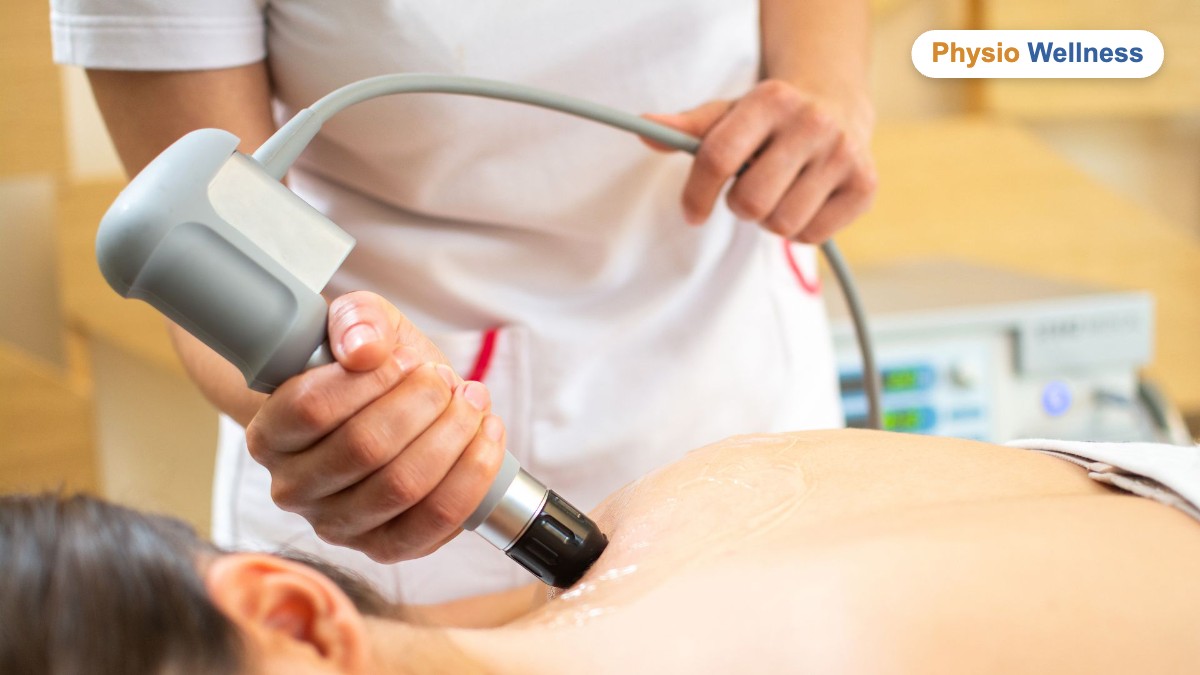
You have done the sensible things. You rested the sore tendon, you stretched it, you tried orthotics or a brace, maybe a course of physiotherapy, and for a while it settled. Then it came back. Months later the same heel, elbow, or Achilles still aches with the first steps in the morning or after activity, and you are starting to wonder whether anything actually changes a tendon that has been sore this long. If that is where you are, shockwave therapy is worth understanding, because it is designed for exactly this problem.
Here is the honest version of what shockwave therapy is, which problems it genuinely helps, what a course involves, and the situations where it is not the right choice.
What shockwave therapy actually is
Shockwave therapy, also called extracorporeal shockwave therapy or ESWT, uses focused acoustic pressure waves delivered through a handheld applicator into a specific area of tissue. It does not involve injections, drugs, or surgery. The waves pass into the sore tendon or muscle and prompt the body to restart a healing response in tissue that has stopped repairing itself.
That last part is the key to understanding why it helps. A tendon that has been overloaded and sore for months often slips out of an active healing state and into a slow, degenerative one, which is why it lingers rather than settling like a fresh strain. This is called tendinopathy, and our post on why rest is not fixing your tendon pain explains why simply waiting rarely turns it around. Shockwave interrupts that stuck cycle by triggering a fresh burst of healing activity, bringing blood flow and repair signals back to the area, and where there are calcium deposits it helps break them up.
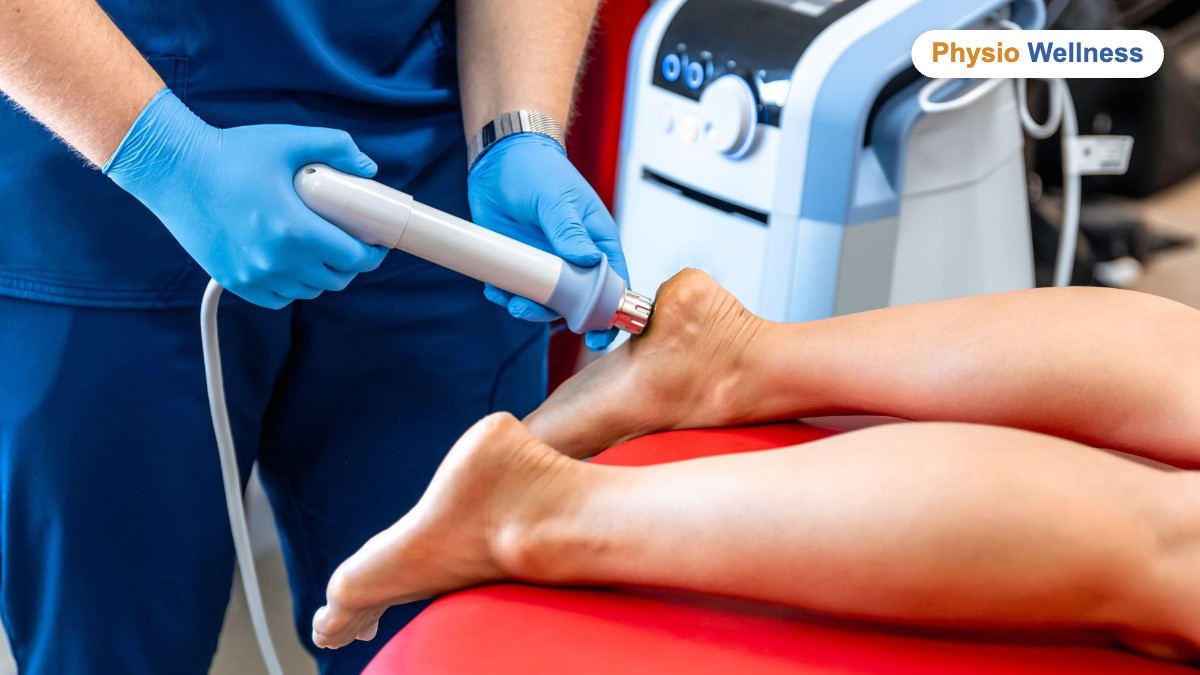
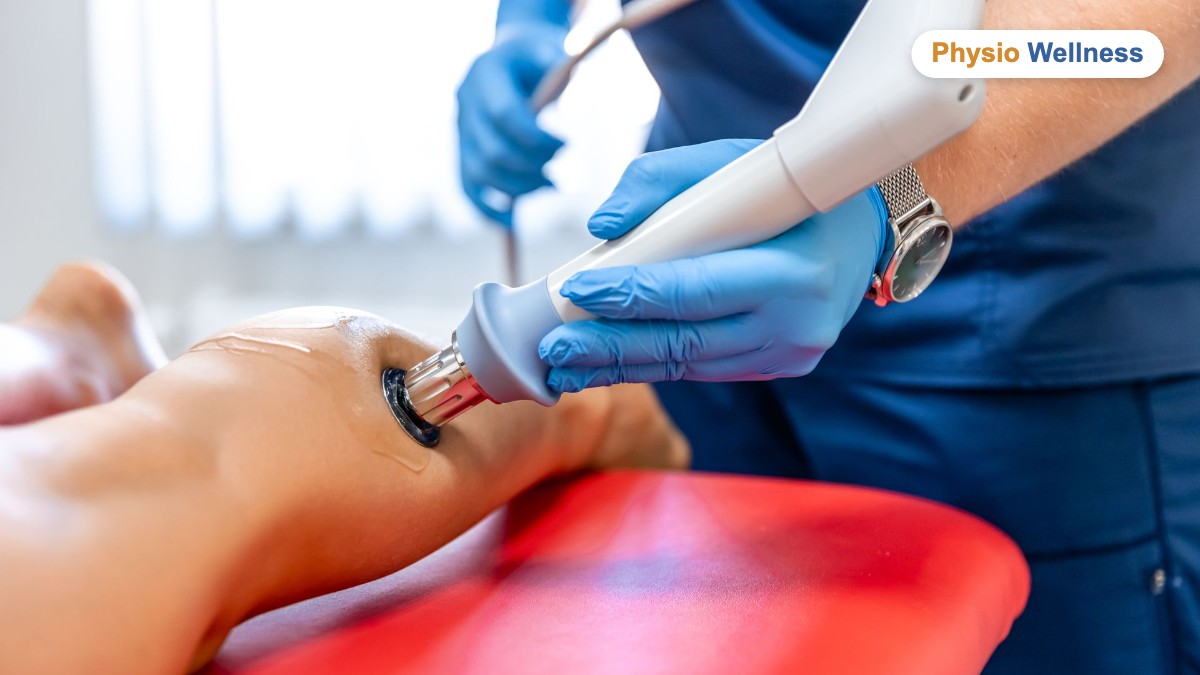
There are two forms used in an Etobicoke clinic setting. Radial shockwave spreads the pressure waves outward from the applicator through the more superficial tissues, which suits areas like the plantar fascia, the Achilles, and the outer elbow. Focused shockwave concentrates the energy at a set depth, which suits deeper targets such as hip tendons, calcium deposits, and stubborn trigger points. Your clinician chooses the form that fits your problem.
What shockwave therapy helps with
Shockwave is aimed at chronic tendon and soft tissue problems that have not responded to the usual care, rather than at fresh injuries or general aches. The conditions it is most often used for include the following.
Plantar fasciitis, the sharp heel pain that is worst with the first steps in the morning, is one of the most common reasons people are referred for shockwave, particularly when the pain has lasted several months and stretching and orthotics have not resolved it. Our guide on plantar fasciitis covers that condition in detail. Achilles tendinopathy, the tender, stiff Achilles that is sore with the first steps of the day and common in runners and active adults, responds in a similar way.
Tennis elbow and golfer’s elbow, the persistent pain on the outer or inner side of the elbow from months of gripping and loading the forearm, are also frequently treated with shockwave once the problem has moved past the early stage. Our post on tennis elbow explains that pattern. Jumper’s knee, the ache at the base of the kneecap in jumping and running sports, sits in the same family of overload tendon problems.
Shockwave is also used for calcific tendinitis in the shoulder, where calcium deposits build up in the rotator cuff and cause sharp pain, and our guide on rotator cuff pain covers shoulder problems more broadly. Beyond tendons, focused shockwave can help settle deep, persistent trigger points and reorganise old scar tissue and adhesions that limit movement after an injury or surgery.
The common thread is chronic, stubborn soft tissue pain that has stopped improving on its own. If your pain is new, or if it is coming from a joint, a nerve, or the spine rather than a tendon, shockwave is likely not the answer, which is why the assessment comes first.
It also helps with some conditions that are easy to miss. Morton’s neuroma, the nerve irritation that feels like a pebble under the ball of the foot, often responds to shockwave once footwear and load have been addressed. Iliotibial (IT) band syndrome, the outer-knee pain that plagues runners and cyclists, is another case where shockwave can settle a stubborn problem that has not improved with rest alone.
What a course of shockwave therapy involves
At Physiotherapy Wellness Inst in Etobicoke, shockwave is always delivered as part of a physiotherapy or chiropractic session, never as a standalone technician treatment, so there is clinical oversight from start to finish. A typical course runs over a few appointments rather than a single visit.
It starts with an assessment. One of our physiotherapists or chiropractors confirms the diagnosis, checks that shockwave is suitable for your problem, and screens for the reasons it should not be used, which we cover further down. This step matters, because shockwave only helps if the thing causing your pain is one it actually treats.
The shockwave itself takes only about ten to fifteen minutes and is done as part of a broader appointment. A coupling gel is applied, and the applicator is moved across the target tissue while it delivers rapid pressure pulses that feel like a firm tapping. Tender areas can feel more sensitive during treatment, and your clinician adjusts the intensity to what you can tolerate. A little soreness in the day or two afterward is normal and expected.
Most people have a short series of sessions spaced about a week apart, and many notice a change partway through the course rather than after the first visit. One point of aftercare is worth knowing in advance, because it runs against instinct. For a day or two after each session it is best to avoid anti-inflammatory medication and ice on the area, because the mild inflammation shockwave sets off is part of the healing response you are trying to trigger. Alongside the shockwave, your plan will usually include targeted exercise and hands-on treatment, since the lasting improvement comes from rebuilding the tendon, not from the waves alone.
When shockwave therapy is not the right choice
Shockwave is a useful tool, but it is not for everyone or every problem, and a responsible clinic tells you when it is not appropriate. There are specific situations where it should not be used.
Shockwave is not suitable if you have a blood clotting disorder or take blood-thinning medication, if there is an active infection or a tumour at the treatment site, or over the growth plates of a child whose bones are still developing. It is not used during pregnancy, and it should not be applied near the chest in anyone with a pacemaker. Your clinician screens for all of these before any treatment begins.
It is also worth being realistic about what shockwave is for. It is aimed at chronic tendon and soft tissue conditions, so it is not the right first step for a fresh, acute injury, for most back and neck pain, or for pain coming from a joint or a nerve. If your problem turns out to be one of those, the assessment will point you toward the treatment that actually fits, whether that is hands-on physiotherapy, a structured exercise plan, or something else. Honest assessment matters more than fitting every problem to one machine.
What shockwave therapy costs, and whether it is covered
A shockwave therapy session at our Etobicoke clinic is $100. Most people need a short course rather than a single visit, so it is worth planning for a few sessions when you budget for it.
Shockwave is not covered by OHIP, because OHIP does not fund this kind of treatment. It is included in most extended health benefit plans under physiotherapy, and we direct bill most insurers, so in many cases you pay little or nothing at the desk. If your tendon problem started after a car accident, shockwave can be covered through your auto insurance (SABS), and for a work injury it may be covered under an approved WSIB claim. We confirm your coverage before you start, so there are no surprises partway through a course.
Questions people ask
What is shockwave therapy used for?
It is mainly used for chronic tendon problems that have not settled with other care, such as plantar fasciitis, Achilles tendinopathy, tennis and golfer’s elbow, jumper’s knee, and calcific tendinitis in the shoulder, along with stubborn trigger points and scar tissue. It works by prompting the body to restart healing in tissue that has become stuck in a degenerative state.
How many sessions will I need?
Most people have a short series of sessions spaced about a week apart, and many notice a change partway through the course. The exact number depends on how long you have had the problem, how the tissue responds, and how your body heals, so your clinician gives you a realistic range at your assessment rather than a fixed promise.
Does shockwave therapy hurt?
It feels like a firm tapping or pressure at the treatment site. Very tender tendons can be more sensitive during the session, and some soreness for a day or two afterward is normal. Your clinician adjusts the intensity to your comfort as they go.
Is shockwave therapy covered by insurance in Ontario?
Because shockwave at our clinic is always delivered under the supervision of a registered physiotherapist or chiropractor, it is eligible for coverage under extended health plans that include physiotherapy or chiropractic care, and we offer direct billing. It is worth checking the details of your own plan.
Is shockwave better than physiotherapy?
It is not a replacement for physiotherapy. Shockwave works best as one part of a plan that also includes targeted exercise and hands-on treatment, which is why we deliver it inside a physiotherapy or chiropractic appointment rather than on its own. The waves restart healing, and the rehabilitation rebuilds the tendon so the improvement lasts.
Ready to settle that long-standing tendon pain?
If you have been carrying the same heel, elbow, or Achilles pain for months and the usual measures have not turned it around, you do not have to keep waiting and hoping it fades. At Physiotherapy Wellness Inst in Etobicoke, we start with a proper assessment, tell you honestly whether shockwave therapy is the right option for your problem, and if it is, we build it into a plan that rebuilds the tendon so the pain stops coming back. If it is not the right fit, we will tell you what is.
Book a shockwave assessment or call (416) 489-5313. We are at 6620 Finch Ave W, Unit 9, in Etobicoke, with free on-site parking. We see patients from across Etobicoke and nearby west Toronto, Mississauga and Oakville.
Leave a Reply