 Skip to content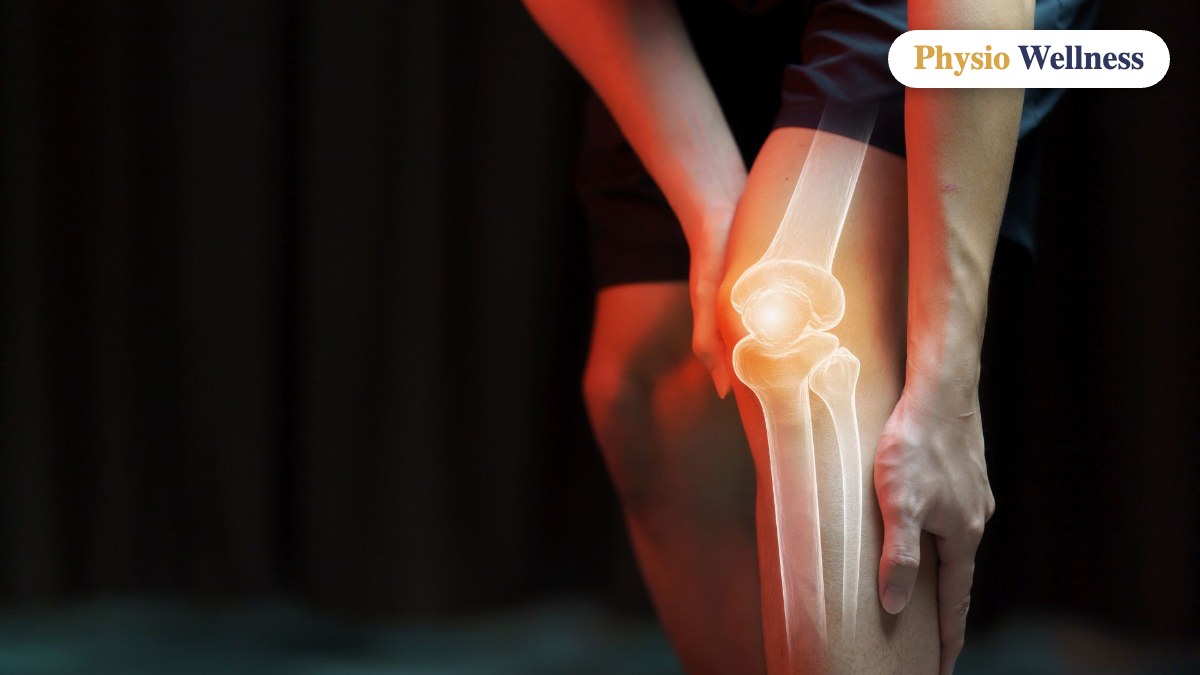
It tends to start as a small thing you can work around. There is a pinch of pain at the front of the knee, right below the kneecap, when you land from a jump or push off hard. At first it warms up once you get going, so you keep playing. Then it starts showing up on the stairs, when you stand up after sitting for a while, or the morning after a game. That nagging spot just under the kneecap is the classic sign of jumper’s knee, and it is one of the more common knee problems we see in active people in Etobicoke.
Here is the honest version, which is the reason to keep reading. Jumper’s knee usually does not need surgery, and it does not settle from rest alone either. This guide explains what jumper’s knee actually is, what it feels like, why resting it tends to fail, how physiotherapy treats it, and the small number of signs that mean you should have the knee looked at sooner rather than later.
What jumper’s knee actually is
Jumper’s knee is the everyday name for patellar tendinopathy, an overload problem in the patellar tendon. That tendon is the strong band that connects the bottom of your kneecap to the top of your shinbone, and it takes the load every time you jump, land, squat, or change direction. When the demand on the tendon repeatedly outpaces its ability to recover, the tissue becomes irritated and painful, and it stops tolerating load the way it used to.
The name comes from the sports where it turns up most, such as basketball, volleyball, and other activities with a lot of jumping and hard landings, but you do not have to be a jumper to get it. Running, squatting under load, and quick stop-and-start sports all load the same tendon. The common thread is a change in load, often a jump in training, a return to sport after time off, or a new activity that the tendon was not ready for.
It helps to know that the pain is coming from the tendon itself, not from the joint surfaces inside the knee. That distinction matters, because it points the treatment squarely at rebuilding the tendon rather than resting the whole knee.
What jumper’s knee feels like
Patellar tendinopathy has a fairly recognisable pattern:
- Pain right below the kneecap, localised to a specific spot on the tendon that you can often press on and find.
- Pain with jumping and landing, and with deep squats, lunges, or pushing off quickly.
- Pain on stairs, frequently worse going down, and when standing up after sitting with the knee bent for a while.
- A warm-up pattern, where the tendon eases once you are moving, then feels worse later that day or the next morning. This after-the-fact soreness is one of the most telling features.
It is worth telling this apart from pain that sits around or behind the kneecap and comes on with prolonged sitting or hills, which is more typical of patellofemoral pain, sometimes called runner’s knee. The two are managed differently, so if you are not sure which one you are dealing with, an assessment settles it quickly and points the plan in the right direction.
The honest part: it responds to loading, not rest
This is the message we want you to leave with. The large majority of jumper’s knee is managed well without surgery, but it is also a tendon problem that rewards patience and the right kind of work. Tendons do not get stronger by being left alone, and they do not respond to a few days off and then a jump straight back to full sport. They respond to being loaded in a graded, controlled way so the tissue rebuilds its capacity.
That is both the good news and the catch. The good news is that you have a lot of control over the outcome through what you do between appointments. The catch is that there is no shortcut that skips the rebuilding. A plan that loads the tendon correctly is what changes things, and that is exactly what physiotherapy is built to guide.
Why rest alone does not fix it
The most common thing people try first is to stop the sport and wait for the pain to go. It makes sense, and calming an angry tendon down for a short spell is reasonable. The problem is what happens next. Complete rest lets the tendon and the muscles around the knee lose strength and tolerance, so the moment you return to jumping or running the pain comes back, because nothing underneath actually changed. Many people then rest again, and the cycle repeats.
This is the same trap that catches other overload injuries, and we explain it in more detail in our post on why rest is not fixing your tendon pain. Jumper’s knee, tennis elbow, and Achilles trouble all share this pattern. The fix is not total rest, and it is not pushing through sharp pain and hoping. It is the guided middle path of gradually loading the tendon so it can handle sport again.
How we treat jumper’s knee at Physio Wellness
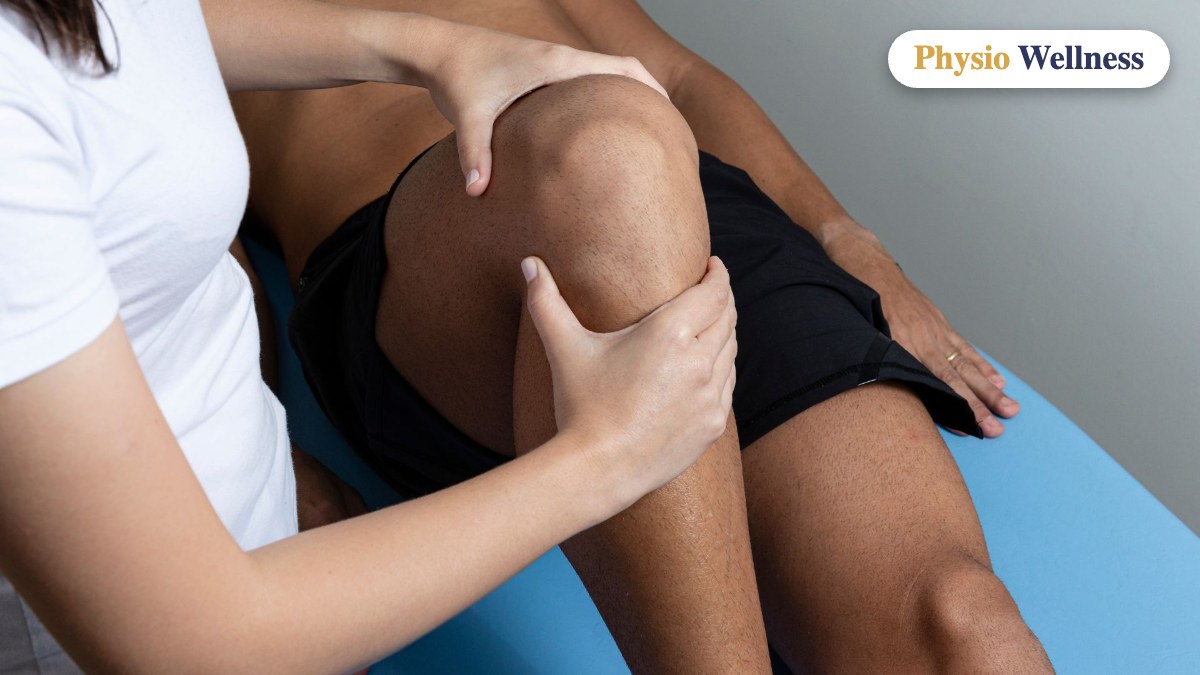
At Physio Wellness in Etobicoke, care for jumper’s knee starts with an assessment to confirm that the pain is coming from the patellar tendon, to see how much load the knee currently tolerates, and to find what tipped it over, whether that was a spike in training, a strength gap, or how you land and move. From there, treatment usually draws on:
- Progressive tendon loading. This is the core of recovery. We start at a level the tendon can handle, often with holds that calm the pain, then build strength through heavier, slower work over time so the tendon rebuilds its capacity. The exercises are simple, but the progression is where the skill is.
- Load and activity management. Rather than shutting sport down completely, we help you adjust how much jumping and running the knee does in the short term, so it keeps working while it recovers instead of losing fitness.
- Hands-on treatment. Manual therapy and soft tissue work around the knee and thigh help settle symptoms and make the loading easier to do well.
- Shockwave therapy. For stubborn, long-standing patellar tendon pain that has not settled with loading alone, shockwave can be a useful addition. We consider it for chronic cases rather than as a first-day fix.
Care is provided by our physiotherapy team, and the plan is adjusted as the knee improves so you are always working at the right level rather than a generic template.

When it is more than a simple case of jumper’s knee
Most patellar tendons do well with conservative care, but not all knee pain is jumper’s knee, and a responsible clinic tells you when to seek more. It is worth a prompt medical assessment, rather than more waiting, if:
- You felt a sudden pop or tearing and cannot straighten the knee or lift the leg, especially after a hard landing. This can signal a tendon rupture and needs urgent attention.
- The knee locks, gives way, or swells up quickly, which points more toward a joint, cartilage, or ligament problem than a tendon.
- There is pain with fever, redness, or heat around the joint, which needs medical review rather than physiotherapy.
- The pain is in a growing teenager at the bottom of the kneecap or over the bump below it, which is common during growth spurts and is worth assessing so the loading is set correctly for a young athlete.
Part of the value of an assessment is catching the knees that are not a straightforward tendon problem and pointing you toward the right care.
Questions people ask
Can jumper’s knee heal without surgery?
For most people, yes. Patellar tendinopathy is usually managed with a structured loading program and sensible activity adjustments, not an operation. Surgery is reserved for a small number of cases that do not respond to a fair trial of good conservative care.
How long does it take to feel better?
It depends on how irritated the tendon is and how long it has been going on, so we do not promise a fixed timeline. Many people find the day-to-day pain starts to ease first, while the strength and tolerance needed to return fully to sport rebuild over the following weeks as the loading takes effect.
Should I stop playing my sport completely?
Usually not completely. Complete rest tends to leave the tendon weaker, and jumping straight back to full sport tends to flare it. The right level is a managed middle path, which is what the assessment is for.
Is it jumper’s knee or runner’s knee?
They can feel similar but sit in different places and behave differently, and they are treated differently. Pain on the tendon just below the kneecap points to jumper’s knee, while pain around or behind the kneecap points more to patellofemoral pain. A quick assessment tells them apart.
Do I need a doctor’s referral?
You do not need a referral to see a physiotherapist with us. If you are claiming through extended health insurance, WSIB, or a motor vehicle accident claim, the requirements vary, so it is worth confirming the details of your own coverage.
Ready to sort out that knee?
You do not have to guess whether that spot below your kneecap is jumper’s knee, and you do not have to choose between resting it forever and pushing through the pain. At Physio Wellness in Etobicoke, we start with a proper assessment, explain clearly what is going on, and build a plan around rebuilding the load your tendon can handle so you can get back to your sport. If it turns out to be one of the cases that needs more, we will tell you honestly.
Book an appointment or call (416) 489-5313, and let us take a proper look before that knee sidelines another season.
Leave a Reply