 Skip to content

You feel it in the ball of your foot, usually between the third and fourth toes. It can feel like standing on a small pebble that is not there, or like a fold in your sock you cannot smooth out. Then comes the burning, the tingling, or a numb patch that spreads into the toes, and it is worse in tight shoes and eases the moment you slip them off and rub your foot. If that sounds familiar, there is a good chance you are dealing with a Morton’s neuroma. Pain that sits at the base of the big toe rather than between the toes is usually a different problem, hallux limitus, a stiffening of the big toe joint.
Here is the honest version of what a Morton’s neuroma is, why it produces that odd pebble feeling, what genuinely helps it settle, and the small number of situations where you should be checked by a doctor rather than book a treatment.
What a Morton’s neuroma actually is
A Morton’s neuroma is an irritated, thickened nerve in the ball of the foot. The nerves that run to your toes pass between the long bones of the foot, and when one of them is squeezed and irritated over time, the tissue around it thickens and becomes sensitive. It is not a tumour, even though the name sounds alarming, and it is not something growing that needs to be removed in most cases. It is a nerve that has been compressed and inflamed, most often in the space between the third and fourth toes, and sometimes between the second and third.
Because it is a nerve problem rather than a joint or bone problem, the symptoms have a particular flavour. You get burning, tingling, numbness, or shooting pain into the toes rather than a deep ache, and that pebble-underfoot sensation is the classic sign. The feeling comes from the swollen nerve sitting where it does not belong, so your foot reads it as something stuck under the ball of the foot.

Why it happens and what it feels like
A Morton’s neuroma builds up when the nerve is squeezed and rubbed more than it can tolerate, and a few ordinary things drive that. Narrow or pointed shoes press the foot bones together onto the nerve, and high heels tip your weight forward onto the ball of the foot, which is why the problem is more common in people who wear those styles often. Activities that load the forefoot repeatedly, such as running, court sports, and a lot of time on your feet, can add to it. The shape and mechanics of your foot matter too, so flat feet, high arches, bunions, and other changes that alter how the forefoot spreads under load can leave a nerve more exposed to pressure.
The pattern is usually recognisable. The pain sits in the ball of the foot and travels into the toes, it flares with tight shoes and forefoot activity, and it settles when you take the shoe off, rest, and massage the area. Many people describe stopping mid-walk to slip the shoe off and rub the foot for relief. It tends to come and go early on and become more persistent if the pressure on the nerve continues.
The reassuring part is that most Morton’s neuromas respond well to conservative care aimed at taking pressure off the nerve, which is where the plan starts.
The honest part: what actually helps
We want to be straight with you, because there is a lot aimed at forefoot pain that overpromises. There is no single insole or gadget that instantly cures a Morton’s neuroma, and surgery is not the first step for most people. What genuinely helps is taking the squeeze and the load off the irritated nerve so it can settle, and then addressing the reasons it was overloaded in the first place.
That starts with the simplest and most effective change, which is footwear. Shoes with a wider, deeper toe box let the foot bones spread instead of pressing onto the nerve, and lower heels keep your weight off the forefoot. From there, offloading the specific spot matters, and a support that sits just behind the ball of the foot can lift and separate the bones to relieve the pressure on the nerve. Settling the irritation, easing the tight structures around the forefoot, and adjusting the activities that flare it all give the nerve room to calm down. The goal is a foot that carries you through a normal day without that burning pebble feeling, and for most people that is a realistic target with the right plan rather than a quick fix.
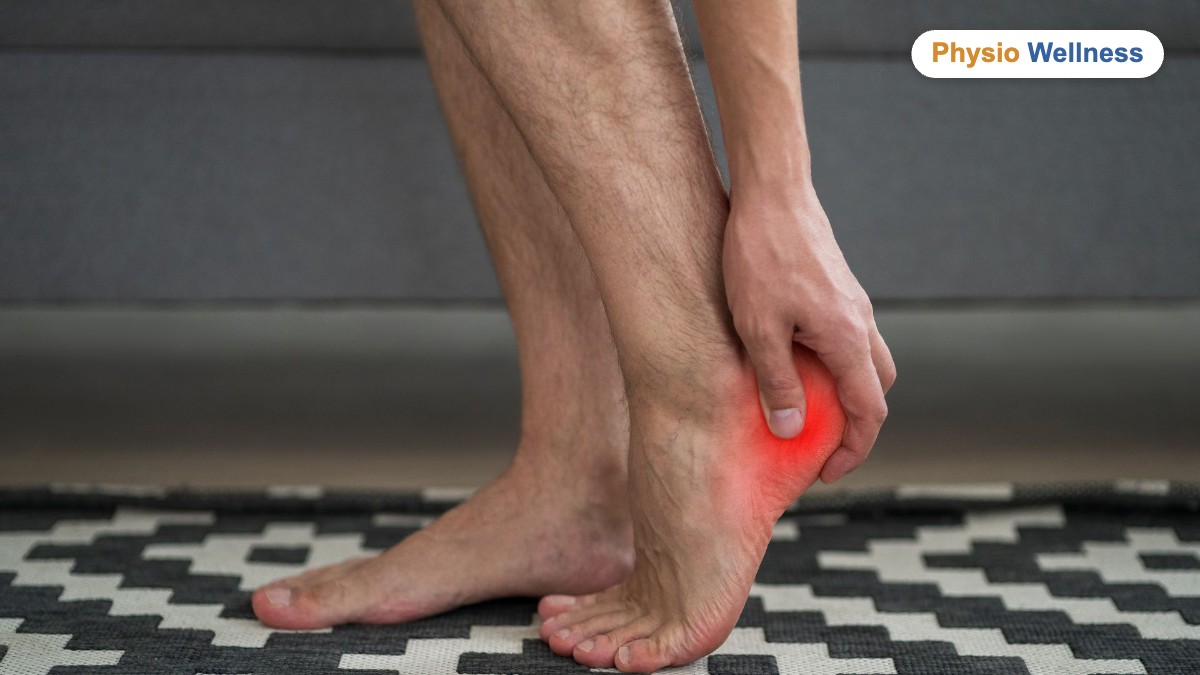
How we treat a Morton’s neuroma at Physiotherapy Wellness Inst
At Physiotherapy Wellness Inst in Etobicoke, care for a Morton’s neuroma starts with an assessment to confirm the nerve is the source, because several forefoot problems can feel similar and the treatment is not the same. Our physiotherapists check the exact site, work out what is loading the nerve, and look at your footwear, your foot mechanics, and the activities that set it off, so the plan fits your foot rather than a generic template.
From there, treatment usually draws on a few things working together. Guidance on footwear comes first, because the right shoe shape does a lot of the work. Custom orthotics are often central to the plan, because a support built for your foot with a pad positioned just behind the ball of the foot spreads the bones and offloads the irritated nerve in a way an off-the-shelf insole rarely matches, and our post on custom orthotics explains how they are made and fitted. Hands-on physiotherapy eases the tight structures around the forefoot, restores normal movement, and strengthens the foot and lower leg so the forefoot is better supported, and we guide you on adjusting the activities and loading that flare it. Because forefoot pain is easy to mislabel, the assessment also tells apart a neuroma from other causes such as a stress fracture or joint inflammation, which our guide on plantar fasciitis touches on for the heel side of foot pain. If the neuroma does not settle with conservative care, we will tell you honestly and help you consider the next options, which can include an injection or, in a small number of cases, a surgical opinion.
Does shockwave therapy help a Morton’s neuroma?
It can, and it is one of the reasons people travel to us from across Etobicoke and Oakville for this exact problem. Shockwave therapy uses focused acoustic pulses to calm the irritated nerve and the thickened tissue around it, easing the burning and the pebble-underfoot feeling without injections or surgery. It is not a magic switch, and it works best paired with the footwear and offloading changes below, but for a stubborn neuroma that has not settled with the basics it is often the step that finally moves things. You can read how it works on our shockwave therapy page.
Simple changes that help day to day
These are not a substitute for a proper assessment, but they take pressure off the nerve between visits.
Change your shoes first. Swap narrow, pointed, or high-heeled shoes for a pair with a wide, deep toe box and a low heel, and give your foot room across the ball where the nerve sits. This one change often brings the most relief.
Give the forefoot a break. Ease off the activities that load the ball of the foot while it is irritated, take your shoes off and gently massage the area when it flares, and avoid long stretches in shoes that squeeze the toes.
Do not push through sharp or spreading numbness. Mild symptoms that settle with rest are common, but pain that is getting worse, or numbness that is spreading rather than easing, is worth having assessed rather than working around.
When forefoot pain needs a doctor, not a treatment
Most Morton’s neuromas are not dangerous, but a small number of situations need medical care first, and a responsible clinic tells you when. Please seek prompt medical attention, rather than booking a treatment, if you notice any of the following.
Forefoot pain that came on suddenly after an impact or a fall, or that is sharp and focused on a bone rather than the nerve space, needs to be checked to rule out a stress fracture. Pain with redness, warmth, and swelling, or with a fever, should be seen promptly rather than treated as a simple neuroma. Numbness, tingling, or colour changes in the foot in someone with diabetes or with poor circulation need medical review, because nerve and circulation problems there require careful handling. And any forefoot pain that is severe, unrelenting, or not settling as expected is worth a medical assessment to confirm what is going on. These situations are uncommon, but they come first.
Questions people ask
How can I relieve Morton’s neuroma pain at home?
Start with the pressure. Switch to wide, low-heeled shoes with a roomy toe box, add a metatarsal pad just behind the ball of the foot to spread the bones and lift pressure off the nerve, and give tight or pointed shoes a rest. Icing after a long day and easing off the activities that flare it help too. These settle a lot of mild cases; if the burning and numbness keep returning, that is the point to have it properly assessed rather than pushing through.
What does a Morton’s neuroma feel like?
Most people describe burning, tingling, or a numb patch in the ball of the foot that spreads into the toes, along with a sensation of standing on a pebble or a bunched-up sock. It is usually worse in tight shoes and forefoot activity and eases when the shoe comes off and the foot is rested and massaged.
Can a Morton’s neuroma go away on its own?
Mild cases can settle once the pressure on the nerve is reduced, especially with a change of footwear early on. When the irritation has been building for a while, it usually needs a plan that offloads the nerve and addresses the mechanics behind it rather than waiting it out, which is why an assessment helps.
Do orthotics help a Morton’s neuroma?
They often help a great deal, because a support built for your foot can lift and separate the bones just behind the ball of the foot and take the squeeze off the nerve. The key is that it is positioned correctly for your foot, which is where a custom fitting and assessment matter.
Will I need surgery?
For most people, no. Surgery is considered only when conservative care and other options have not settled the problem, and it is not the starting point. Our aim is to relieve the nerve and address what is loading it first, and to be honest with you about the next steps if it does not respond.
How long until it feels better?
It depends on how long it has been going on and what is driving it, so we do not promise a fixed timeline. Many people notice relief soon after changing footwear and offloading the nerve, with the lasting improvement coming as the mechanics and loading are addressed.
Ready to settle that pebble-underfoot feeling?
You do not have to keep stopping to slip your shoe off and rub the ball of your foot, and you do not have to guess whether it is a neuroma, a stress fracture, or something else. At Physiotherapy Wellness Inst in Etobicoke, we start with a proper assessment, explain clearly what is irritating the nerve, and build a plan around offloading it and fixing the mechanics behind it so the burning and the pebble feeling stop coming back. If it turns out to be something that needs a doctor first, we will tell you honestly. We are on Finch Avenue West in Etobicoke and regularly see patients from Oakville and across the west end for forefoot pain.
Book an assessment or call (416) 489-5313. We are at 6620 Finch Ave W, Unit 9, in Etobicoke, with free on-site parking.