 Skip to content
You did everything right. You rested it. You stretched it. You stayed off it, iced it, maybe bought the insoles or the brace. And months later, the pain is still there, sometimes worse.
Shoulder pain that flares when you reach or lie on it? See our guide to rotator cuff pain in Etobicoke and how to treat it without surgery.
It is a frustrating and confusing place to be, because rest is supposed to work. For most injuries it does. But for a stubborn tendon, rest alone is often exactly why it is not getting better.
Here is what is actually going on, and what finally moves the needle.
A chronic tendon is not an injury that is still healing. It is one that stopped.
When you first strain or overload a tendon, your body kicks off an inflammatory healing response. That is the normal, useful kind of pain, and rest genuinely helps it settle.
But when a tendon is overloaded again and again, or the original problem drags on for months, something changes. The tendon slips out of active healing and into a slow, degenerative state. Clinicians call this tendinopathy. The tissue becomes disorganised and weaker, and, crucially, it stops trying to repair itself.
That is the part most people are never told. Once a tendon reaches this stage, resting it does not restart the repair, because there is no active repair left to protect. You are resting a process that has already switched off. The pain settles a little when you stop using it, then returns the moment you load it again, and the cycle repeats.
This is why so many people with chronic heel pain, tennis elbow, or a sore Achilles feel like they are going in circles. The problem is not that they have not rested enough. It is that the tendon needs a reason to start healing again.
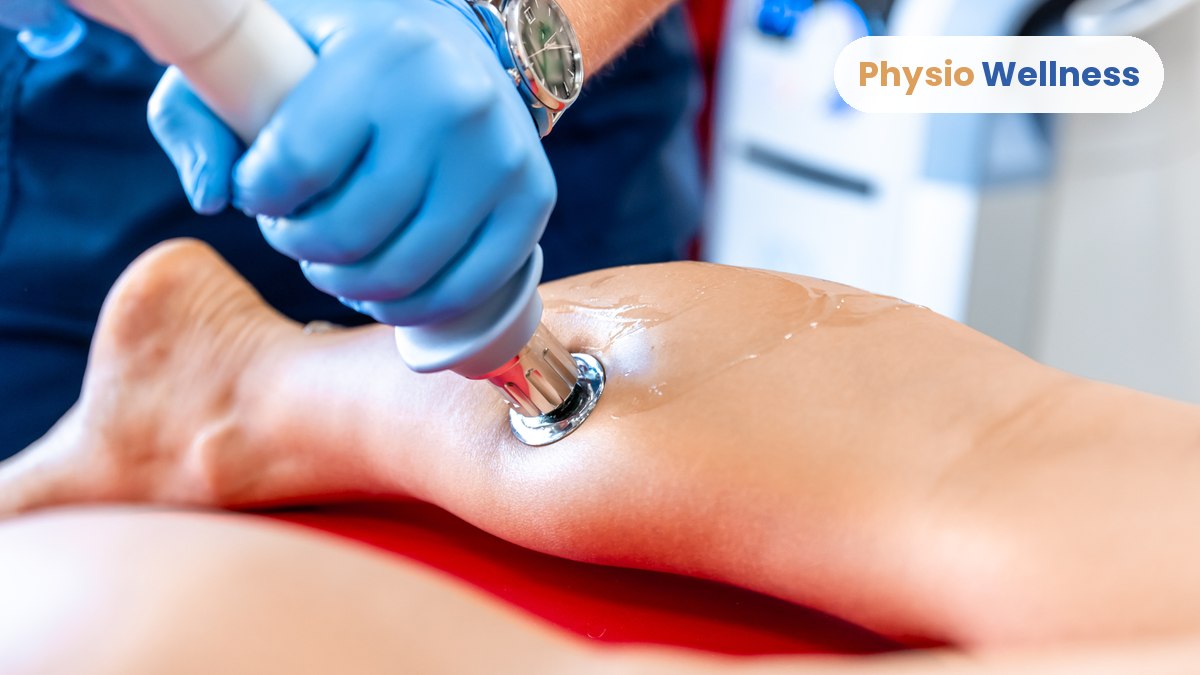
How shockwave restarts the process
This is where shockwave therapy comes in, and why it is used specifically for these stalled, chronic cases rather than for a fresh injury.
Shockwave therapy, also called ESWT (extracorporeal shockwave therapy), delivers focused acoustic pressure waves into the affected tissue through a handheld applicator. Those waves do a few things at once: they stimulate blood flow, break down the scar tissue and calcium deposits that build up in a chronic tendon, and, most importantly, trigger a fresh healing response in tissue that had given up.
In other words, it does the one thing rest cannot. It tells a degenerated tendon to start repairing again, flooding the area with the growth factors that rebuild healthy tissue.
That is also why shockwave is not a treatment for a brand-new strain. If your body is already healing, you do not need to restart anything. It is for the pain that has been hanging around for three to six months or longer and has not responded to the usual care.
What it is actually used for
At Physiotherapy Wellness Inst in Etobicoke, shockwave therapy is used for the classic stubborn tendon problems, including:
- Plantar fasciitis: sharp heel pain that is worst with your first steps in the morning
- Achilles tendinopathy: a tender, stiff Achilles, common in runners and active people
- Tennis and golfer’s elbow: chronic pain on the outside or inside of the elbow from repetitive loading
- Jumper’s knee: patellar tendon pain from jumping and squatting
- Calcific tendinitis of the shoulder: calcium deposits in the rotator cuff that shockwave can help break down
- Stubborn trigger points that have not responded to hands-on therapy
For chronic plantar fasciitis in particular, research suggests a large share of people, on the order of 70 to 80 percent, get significant pain relief from shockwave. As with any treatment, results vary by person and by how long the problem has been present.
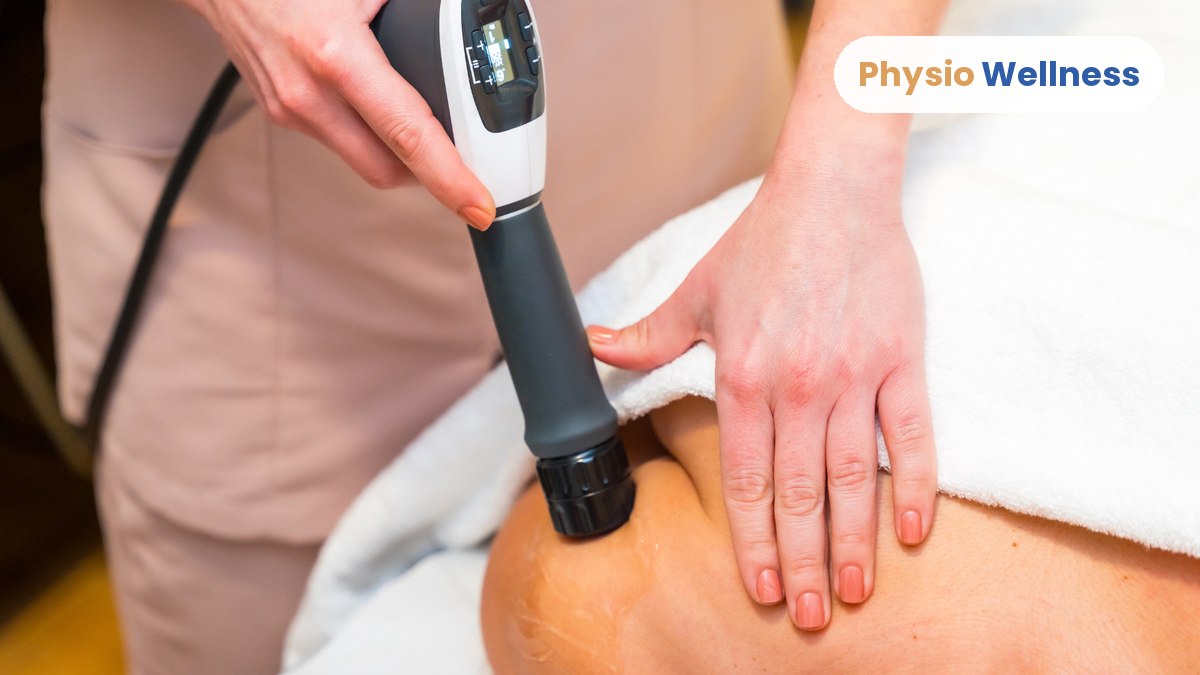
Does it hurt? Honestly.
People tend to picture something more dramatic than it is. During treatment you feel rapid pressure pulses, a firm tapping sensation at the spot being treated. On a very tender tendon, that spot can feel more intense, but your clinician adjusts the intensity to your comfort throughout. It is not usually described as painful.
Afterward, it is normal to feel some soreness in the area for 24 to 48 hours. That is expected, and it is part of the healing response the treatment is meant to trigger, not a sign anything went wrong.
The part that actually makes it work: it is not done alone
This matters, and it is worth being clear about, because shockwave on its own is only half the job.
A tendon that has been told to start healing then needs to be loaded correctly so it rebuilds strong. At our Etobicoke clinic, shockwave is never a standalone treatment. Every session is delivered by a registered physiotherapist or chiropractor as part of a broader appointment, and it is paired with progressive rehabilitation, targeted exercise, and hands-on soft tissue work.
There are no technician-only sessions. The shockwave restarts the repair, and the rehab makes sure the tendon comes back stronger than it was, so you are not back in the same spot in six months.
What it costs
A shockwave session is $100, and because it is delivered within a physiotherapy or chiropractic appointment under a registered clinician, it is typically covered under extended health plans that include physiotherapy or chiropractic. We direct bill most insurers, so in many cases you pay little or nothing out of pocket.
Coverage varies by plan, so it is worth confirming your exact cost and coverage when you book.
When shockwave is not the answer
Good treatment starts with an honest assessment, not a sales pitch, so it is just as important to say when shockwave is not appropriate.
It is not suitable if you have a blood clotting disorder or take anticoagulant (blood-thinning) medication, if there is an active infection or a tumour at the treatment site, for children with open growth plates, or during pregnancy. It is also not used near the chest in people with a pacemaker. Your clinician screens for all of this before any treatment.
And shockwave is only used for the conditions it actually treats. You will not be given shockwave for a problem it cannot help. The first step is always a proper diagnosis, so you are treating the real cause of your pain, not just chasing the symptom.
If you have been stuck for months
If your tendon pain has lasted three months or more, and rest, stretching, and time have not fixed it, that is not a sign you need to rest harder. It usually means the tendon has stopped healing on its own and needs a reason to start again.
Call (416) 489-5313 or book an assessment at our Etobicoke clinic. We will assess your specific problem honestly, confirm whether shockwave is the right fit, and build a plan to get the tendon healing again.
General information, not medical advice. A proper assessment is needed to determine the cause of your pain and whether shockwave is appropriate for you.
Frequently asked questions
How many sessions will I need?
Most people have a short course of three to six sessions, usually a week apart, with many noticing meaningful improvement around session three or four. The exact number depends on how long you have had the problem, how severe the tissue damage is, and how your body responds.
Does shockwave therapy hurt?
Most people describe a firm tapping or pressure sensation rather than pain. A very tender tendon can feel more intense, but your clinician adjusts the intensity to your comfort. Mild soreness for a day or two afterward is normal and part of the healing response.
Is it covered by insurance?
A session is $100, and because it is delivered by a registered physiotherapist or chiropractor as part of your appointment, it is typically covered under extended health plans that include physiotherapy or chiropractic. We direct bill most insurers. Coverage varies, so confirm your plan when you book.
How is this different from just doing physio?
Shockwave is not a replacement for physiotherapy, it is part of it. It restarts healing in a stalled tendon, and the rehabilitation exercises then rebuild the tendon’s strength. The two work together, which is why we never do shockwave on its own.
Who should not have shockwave therapy?
It is not suitable for people with blood clotting disorders or on blood thinners, active infection or a tumour at the site, children with open growth plates, or during pregnancy, and it is not used near the chest for pacemaker patients. Your clinician screens for all of this first.