 Skip to content
If the worst heel pain of your day is the first few steps out of bed, and it has been going on for weeks or months, you are almost certainly dealing with plantar fasciitis. It is one of the most common reasons people in Etobicoke come to see us for foot pain, and by the time they book, most have already tried to fix it on their own. Not all foot pain is plantar fasciitis, though; a stiff, aching big toe joint on push-off is more likely hallux limitus.
That is the pattern we see again and again. Someone waits it out, assuming the morning pain will fade. It doesn’t. They rest it, which feels sensible but changes nothing underneath. They buy a pair of drugstore insoles for the cushioning. They do a few heel stretches they found online, on and off, often not the ones their foot actually needs. Maybe they get a cortisone shot that quiets it down for a while. Then it comes back.
None of that is silly. It is just aimed at the wrong target. Plantar fasciitis keeps coming back when you treat the sore spot and leave the cause alone.
Why rest and drugstore insoles keep failing
The plantar fascia is a thick band of tissue along the bottom of your foot, and it gets loaded with every step you take. The pain is the symptom. The cause is usually somewhere else in the chain.
On our own plantar fasciitis page we list the usual drivers, and they are rarely the heel itself: tight calves and a tight Achilles tendon, weak feet, flat feet or high arches, poor footwear, and long hours of standing. Sometimes the heel pain is even being referred from an irritated nerve in the foot or the low back rather than the fascia at all.
Look at that list and the problem with the do-it-yourself approach becomes obvious. A cushioned insole pads the heel but does nothing for a tight calf or a weak foot. Rest calms the tissue down but the moment you are back on your feet, the same mechanics that overloaded the fascia are still there. You have soothed the symptom and skipped the driver. That is why it lingers, and it is why the honest first step is a proper assessment of your foot, your calf, and how you move, not another insole.
What actually works for plantar fasciitis
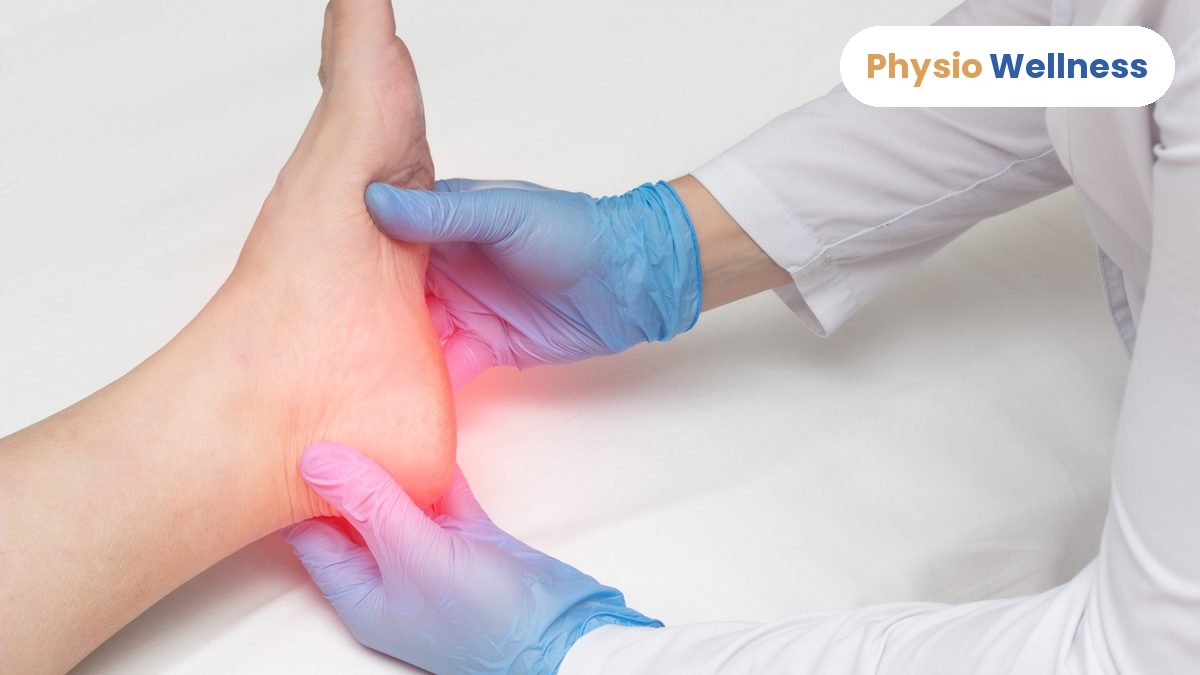
There is no single fix. Recovery comes from combining the right treatments for your specific foot, which is why every plan we build starts with a hands-on assessment rather than a product. From there, three tools do most of the work, and which ones you need depends on what the assessment finds.
Physiotherapy is the foundation, and nearly everyone needs it. A tight calf and a weak foot have to be corrected no matter what else is going on, so physiotherapy leads the plan for almost every case: a progressive stretching and strengthening program built for your foot, plus hands-on work to settle the tissue. This is the same reason rest alone rarely fixes stubborn soft-tissue pain. The tissue needs the right load, not none.
Custom orthotics come in when your mechanics are a real driver. If the assessment shows flat feet, high arches, or a gait that keeps overloading the fascia, generic insoles cannot correct that. Custom orthotics are prescribed to your foot to fix the alignment and take load off the painful structures. That is the difference between correcting the mechanics and just adding padding.
Shockwave therapy is the escalation for stubborn, chronic cases. When heel pain has been dragging on and has not responded to the exercise work, shockwave therapy uses acoustic waves to stimulate repair in slow-to-heal tissue. We tend to reach for it in cases that have been going for three months or more, not as a first move. Our guide to shockwave therapy for chronic tendon pain explains what a course involves.
So the plan is not a menu you pick from. Physiotherapy underpins it, orthotics get added when the mechanics call for them, and shockwave is there for the cases that need a push.
How long does it take? The honest answer
Most people see real improvement within a few weeks of consistent work. That is the honest headline, and it is the same language we use on the service page, because it is what we actually see.
Two things are worth saying plainly. First, this is slow-healing tissue that gets loaded every single step, so progress is gradual and not perfectly linear. Some days will feel better than the day before, and some will not. Second, the people who recover fastest are the ones who keep up the exercises and the footwear changes after the sharp morning pain eases, rather than stopping the moment it feels better. Cases that have been dragging on for months before the first visit generally take longer to fully settle than ones caught early.
We will not put a fixed number of weeks or a success percentage on it, because your foot is not a statistic. What we can tell you at the assessment is what is driving your case and roughly what your timeline looks like.
When heel pain is not plantar fasciitis
Not all heel pain is plantar fasciitis, and part of a good assessment is ruling out the things that imitate it. This matters, because the treatment is different.
A few of the common mimics: pain that is actually a pinched nerve in the foot or referred from the low back rather than the fascia; a heel stress fracture, which tends to be a deeper, more constant ache that worsens with impact rather than the classic first-steps-in-the-morning pattern; thinning of the fat pad under the heel, more common with age; an Achilles or insertional tendon problem at the back of the heel rather than underneath it; and, less often, an inflammatory arthritis affecting the joint.
The signs that point away from ordinary plantar fasciitis are worth knowing: numbness, tingling, or burning that radiates; pain that is constant rather than worst on those first morning steps; pain that wakes you at night; or heel pain that started right after a specific injury. Any of those deserve a closer look, and sometimes imaging, before you assume it is the fascia. If you want a plain-language overview of the condition itself, the American Academy of Orthopaedic Surgeons keeps a good one.
The large majority of heel pain we see does turn out to be plantar fasciitis and does respond well to conservative care. The point of the assessment is to catch the cases that are something else, so you are not spending weeks stretching a foot when the real problem is higher up the chain.
Who we see for this in Etobicoke

Plantar fasciitis has a type, and prolonged standing on hard surfaces is one of the most reliable ways to develop it or wake it back up. The people we see most for this in Etobicoke tend to be the ones who are on their feet all day on concrete: nurses and healthcare staff, warehouse and factory workers around the Finch and Highway 27 corridor near our clinic, retail staff, and tradespeople. Add the weekend runners, and the patients where age or added weight is part of the picture, and you have most of who walks in with it.
If that sounds like you and your footwear is unsupportive, you are not doing anything wrong, you are just in the group most likely to overload the fascia and keep re-aggravating it. That is fixable, but not with cushioning alone.
Ready to sort out your heel pain?
We are a physiotherapy and rehab clinic in Etobicoke, serving Etobicoke and West Toronto since 1989. Most new patients are seen within about five business days, we direct-bill most insurers, and you do not need a referral to book physiotherapy.
Come in for a proper assessment of your foot, your calf, and how you move, and we will build a plan around what is actually driving your case. If your heel pain has lasted more than a week, is getting worse, or is interfering with work or sleep, that is the time to have it looked at.
Request a consultation or call (416) 489-5313. Not sure what a first visit involves? Here is what to expect at your first appointment.