 Skip to content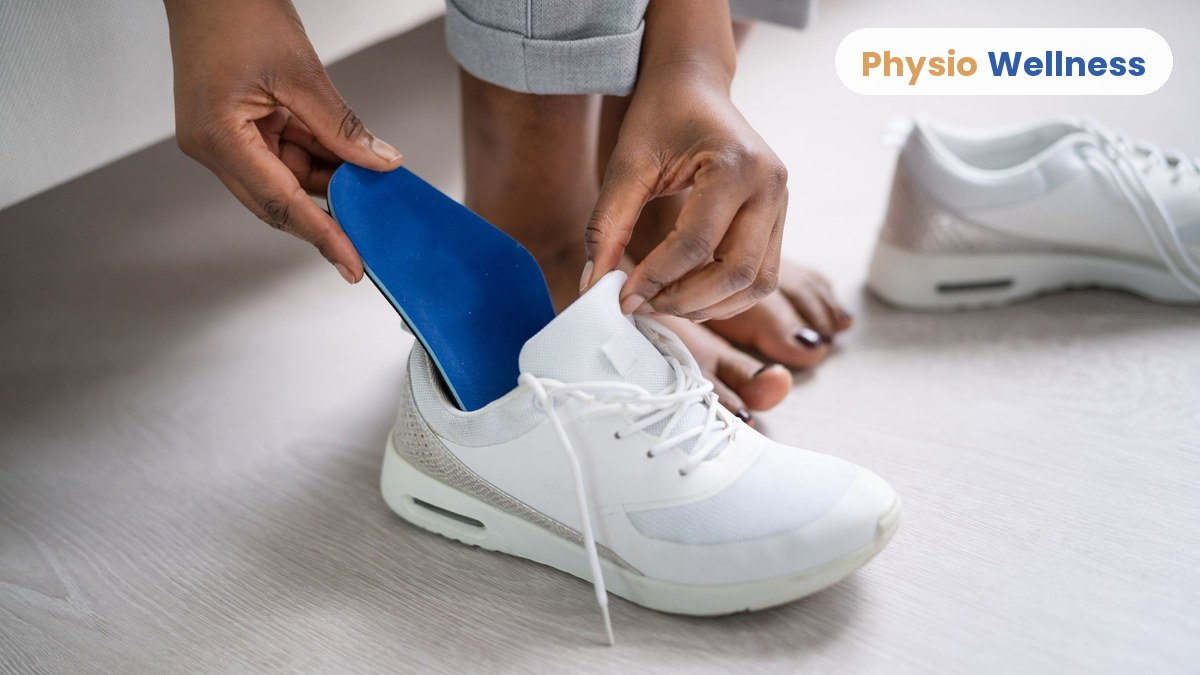
If you have foot pain that will not settle and you have already bought a pair of arch supports at the drugstore, or stood on a pressure plate at a mall kiosk and walked out with a boxed insole, you have probably wondered whether the real custom kind is worth it. It is a fair question, and the honest answer is: sometimes yes, and sometimes no. Custom orthotics are one of the more useful tools we have for the right foot, and one of the more over-sold products in the wrong one.
So this is a plain guide to which group you are in. What custom orthotics actually correct, how to tell if your pain is the kind they help, what they cost in Ontario, and when they are not the answer at all.
Why the drugstore insole did not fix it
A cushioned insole from the pharmacy does one thing: it pads. Padding feels nice under a sore heel for a few days, and for a mild, short-lived ache that is sometimes all you need. But if your pain keeps coming back, padding is treating the symptom and leaving the cause alone.
The cause, most of the time, is mechanical. Your foot is the base of a chain that runs up through the ankle, knee, hip, and low back, and when the base is off, everything above it compensates. A collapsed arch rolls the ankle inward, which rotates the knee, which tilts the pelvis. A generic insole cannot correct any of that, because it was not built for your foot or your particular fault. It is the same shape for everyone who buys that size.
That is the difference a true custom orthotic is meant to make. As our custom orthotics page puts it, off-the-shelf insoles treat symptoms, while custom orthotics are built from a precise cast of your foot and prescribed to correct the biomechanical cause of the pain. One pads. The other is designed to change how your foot loads with every step.
How to tell if custom orthotics will actually help you
Orthotics are not a general foot-pain cure. They earn their place when the problem is genuinely mechanical, and there are some fairly reliable signs that yours is. You may be a good candidate if:
- Your worst heel pain is the first few steps out of bed in the morning, the classic plantar fasciitis pattern.
- Your arches are flat and your feet roll inward when you walk, or the opposite, high arches that leave you unstable with pain in the ball of the foot.
- Your knee, hip, or low back pain gets worse the longer you stand or walk.
- You have already tried store-bought arch supports and got no lasting relief.
- You are on your feet all day at work and your feet are chronically fatigued and sore.
- You have a history of repeated lower-limb injuries, like ankle sprains, shin splints, or IT band pain.
- You have diabetes or another condition that affects sensation or circulation in your feet, where protecting at-risk skin matters.
None of these is a guarantee on its own. They are the picture that, together, points toward a foot whose mechanics are driving the pain. The way to know for sure is an assessment, not a self-diagnosis, and that is the honest first step rather than ordering a device online. One common example is a Morton’s neuroma, where a support placed just behind the ball of the foot offloads the irritated nerve.
What custom really means here
The word custom gets used loosely, so it is worth being precise about what it means at our clinic, because it is also what insurers look for.
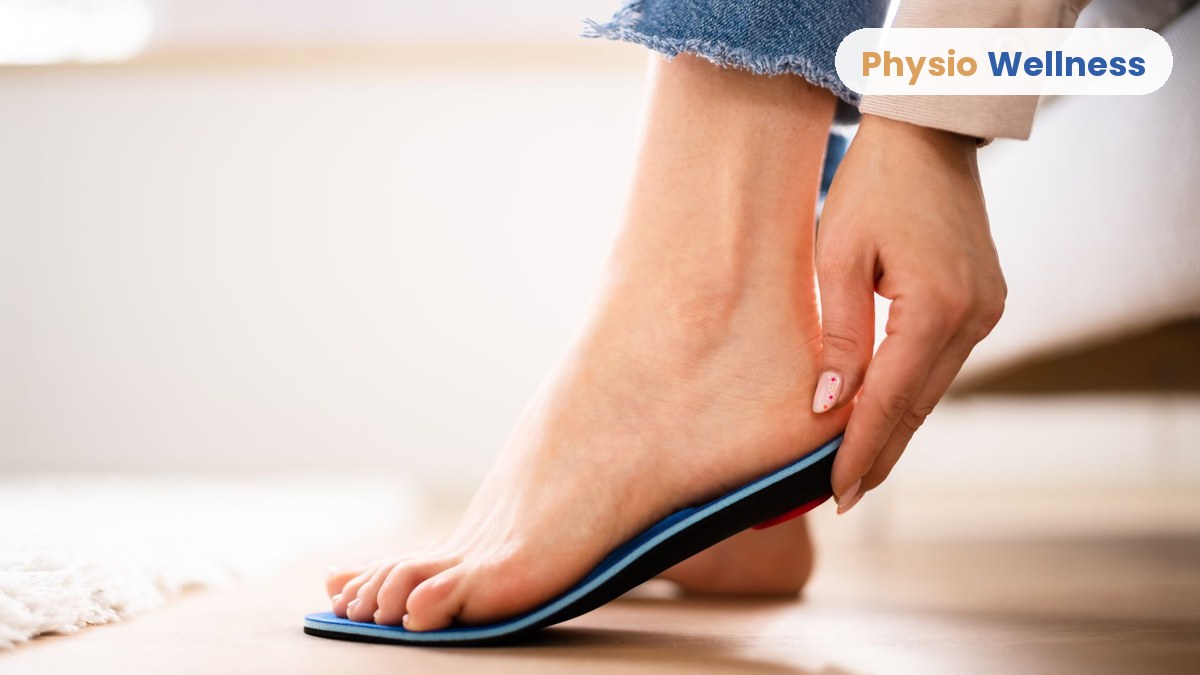
A custom foot orthotic is a prescription medical device. It is fabricated in a certified laboratory from a three-dimensional volumetric foam cast of your foot, taken in a corrected, neutral position. That is a different thing from a heat-molded insole or a mass-produced arch support, and it is a different thing again from the pressure-plate scan you may have stood on at a kiosk. Most extended health insurers in Ontario require a foam cast, not a computerized scan alone, before they will reimburse.
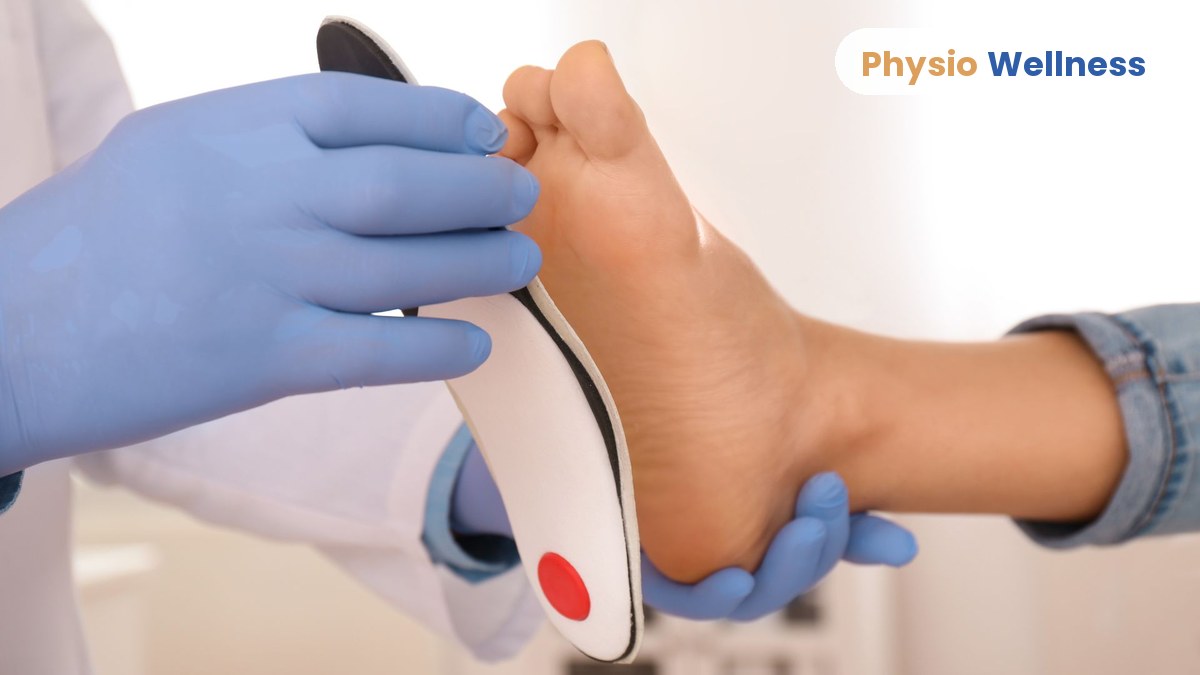
Just as important is who does the assessment. At Physiotherapy Wellness Inst, a registered physiotherapist performs a full lower-limb biomechanical assessment and gait analysis before any casting happens. You are not getting a prescription generated by a machine reading. You are getting one written by a clinician who has looked at your joint range, your muscle strength and flexibility, your foot alignment, and how you actually move. That is the part that makes the finished orthotic match your foot, your condition, and your footwear, rather than a scan of your arch height.
How they are made, and how long it takes
The process runs in three steps, and it is helpful to know it before you book so there are no surprises.
First is the biomechanical assessment: a full lower-limb evaluation of joint motion, strength, alignment, and leg length. This is the clinical foundation of the prescription. Second is the gait analysis and cast: you walk while the clinician watches how you load, strike, and pronate, and then your feet are cast in 3D foam in a neutral position. Third is fabrication and fitting: the cast and prescription go to a certified orthotic lab, which typically takes two to three weeks to build your orthotics. When they arrive you come back to be fitted, shown how to break them in, and checked for any adjustments, which are included at no extra charge.
That break-in matters. A custom orthotic changes how your foot sits, so it is normal for them to feel firm or noticeable at first, and you wear them in gradually rather than all day from day one.
What custom orthotics cost in Etobicoke, and what insurance covers
Here is the part people most want a straight answer on. At our clinic, custom-made orthotics are $495 a pair, and that is listed openly on our pricing page.
Most extended health plans in Ontario cover custom orthotics, typically somewhere between $300 and $500 per pair, and some plans go higher. Most plans allow a new pair every one to two years. So depending on your specific benefits, your out-of-pocket cost can be small or, on some plans, nothing at all. The only way to know your number is to check your own policy, and we will help you do that.
A few practical points on coverage. Insurers generally require a prescription from a licensed provider, documentation of the biomechanical assessment and gait analysis, a 3D foam cast, and a lab invoice showing custom fabrication. A physiotherapist or chiropractor can write the prescription; if your particular plan insists on a physician’s prescription, we can facilitate a virtual OHIP medical appointment so you do not have to arrange that yourself. Custom orthotics are also covered as supplementary goods under auto insurance (MVA) and through WSIB for eligible workplace injuries. We provide the paperwork and direct-bill most insurers, so in most cases you are not paying up front and waiting for a refund.
When custom orthotics are not the answer
This is the section the mall kiosk will never give you. Orthotics are genuinely useful, but they are not for every foot or every pain, and it is worth being clear about when they are not.
If your pain is not mechanical in origin, an orthotic will not fix it. Heel pain that is actually a pinched nerve, a stress fracture, an inflammatory arthritis, or pain referred down from your low back needs a different treatment, and no insert corrects it. Part of a proper assessment is ruling those in or out before anyone talks about casting your foot. Signs that point away from a simple mechanical problem include numbness or burning that radiates, pain that is constant rather than worst on those first morning steps, pain that wakes you at night, or pain that started right after a specific injury. Any of those deserve a closer look first.
And even when orthotics are the right call, they are rarely the whole plan. A tight calf, a weak foot, or a movement habit will keep re-loading the tissue no matter how good the orthotic is. That is why we treat them as one part of a plan rather than a standalone product, which is the next point.
Orthotics work best inside a plan, not on their own
An orthotic changes the platform your foot stands on. It does not, by itself, lengthen a tight calf or strengthen a weak foot. So the patients who get the most out of custom orthotics are usually the ones who pair them with the rest of the work.
Take plantar fasciitis, the single most common reason people ask us about orthotics. On its own, an orthotic can offload the fascia, but the fuller fix, as we explain in our guide on why rest and insoles are not fixing your heel pain, also involves loosening the calf and strengthening the foot. Chronic Achilles pain is similar: correcting the pronation with an orthotic reduces the load on the tendon, and it is frequently combined with shockwave therapy for the stubborn cases. This is why our orthotics prescriptions come out of a physiotherapy assessment and sit inside a broader treatment plan, rather than being handed over as a product and left to do all the work alone.
Common questions about custom orthotics
What is the difference between custom orthotics and store-bought insoles?
Custom orthotics are prescription medical devices fabricated from a 3D cast of your foot in a corrected position. Store-bought insoles offer generic arch support in a fixed shape. Custom orthotics are built to correct the specific mechanics driving your pain, and they are covered by most extended health plans.
Are custom orthotics covered by insurance in Ontario?
Most Ontario extended health plans cover them, typically between $300 and $500 per pair, with replacement allowed every one to two years. Insurers require a prescription, a biomechanical assessment, and a 3D foam cast. We provide all of that documentation and direct-bill most providers.
How long do they take to get?
After your assessment and foam-casting appointment, the lab typically takes two to three weeks to fabricate them. You then come in for a fitting, with any adjustments made at no extra charge.
Can orthotics help with knee and back pain, not just feet?
Yes, when the knee or back pain is being driven from below. Overpronation and even a small leg-length difference create upstream stress on the knee, hip, and lumbar spine, and correcting the foot alignment can reduce it. It is not a fix for every knee or back problem, which is why the assessment comes first.
How long do a pair last?
Custom orthotics generally last two to four years depending on your activity, footwear, and materials. Since most plans allow replacement every one to two years, a reassessment at replacement time makes sure the new pair still matches your mechanics.
Do I need a doctor’s referral?
No referral is needed to book the assessment. A physiotherapist or chiropractor can write the orthotic prescription. If your specific insurer requires a physician’s prescription, we can arrange a virtual OHIP appointment to get it.
Book a custom orthotics assessment in Etobicoke
We are a physiotherapy and rehab clinic in Etobicoke, serving Etobicoke and West Toronto since 1989. Most new patients are seen within about five business days, no referral is needed to book, and we direct-bill most insurers.
The right first step is not ordering an orthotic. It is a proper assessment of your feet and how you move, so you find out whether custom orthotics are actually the answer for your pain, and if they are, get a pair built for your foot rather than off a shelf.
Book your assessment or call (416) 489-5313. New to the clinic and not sure what a first visit involves? Here is what to expect at your first appointment.