 Skip to content

It often starts in the back, but the part that frightens people is what happens next. A deep ache in the lower back you could probably live with, and then one day it changes. A line of pain, or a strange numb, tingling feeling, starts travelling down into the buttock and the leg. Bending forward, sitting for a long stretch, or coughing and sneezing makes it worse. For some people it shows up in the neck instead, with the same kind of ache spreading down into the arm. When back pain starts sending signals down a limb, there is a good chance a disc is involved.
Related: Lower back pain and when to see a chiropractor in Etobicoke.
Here is the honest version, and it is the reason to keep reading. Most disc problems get better without surgery when they are treated correctly, and the wait-and-rest approach that feels so natural is usually the thing that keeps them hanging around. This guide explains what a herniated disc actually is, what it feels like, why bed rest is not the fix, the treatment that genuinely helps, and the small number of warning signs that mean you should be seen urgently rather than book a treatment.
What a bulging or herniated disc actually is
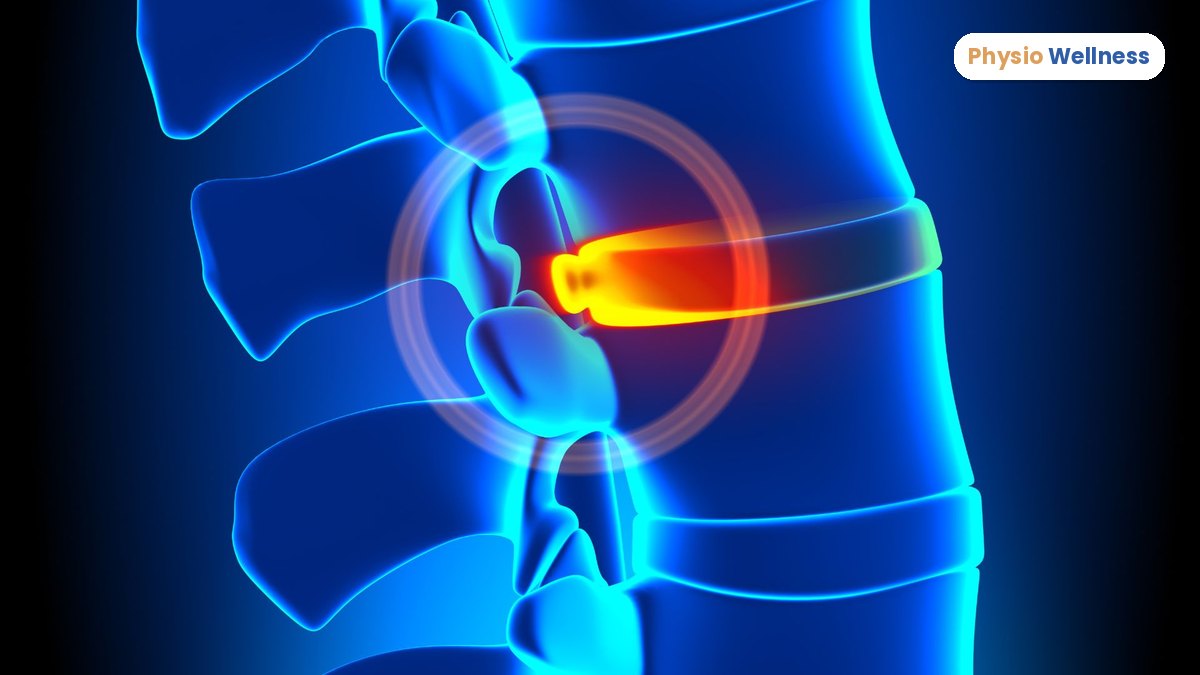
Between each of the bones in your spine sits a small cushion called a disc. Each disc has a tough outer ring and a softer centre, and together they act as shock absorbers that let your spine bend, twist, and carry load. They are working quietly every time you move.
A bulging disc happens when one of those cushions pushes out of its normal shape. A herniated disc is a step further along, where the softer centre pushes through the outer ring. The trouble usually starts not because the disc is out of place on its own, but because it presses against a nearby nerve. That pressure is what produces the radiating pain, numbness, or weakness down an arm or a leg, which is often a bigger part of the story than the back pain itself.
Discs are put under strain by a mix of everyday things rather than one single cause. Repetitive stress from long hours of sitting or from heavy lifting is common, and so is a sudden load such as a car accident. Genetics, carrying extra weight, and a mostly sedentary lifestyle all play a part too. In other words, a disc problem is rarely about one wrong movement, and understanding that helps take some of the fear out of it. When a disc problem comes from lifting at work, it is one of the most common workplace injuries, and physiotherapy for it is often covered by WSIB.
What a disc problem feels like
Disc pain has a fairly recognisable pattern, though it varies from person to person:
- Back or neck pain, depending on which part of the spine is involved, sometimes with a sense of stiffness or a catch when you move.
- Radiating pain down a leg or an arm, which is often sharper and more distinct than the back pain itself. When it travels down the leg, this is what many people know as sciatica, and our guide on sciatica in Etobicoke covers that pattern in detail.
- Numbness or a tingling, pins-and-needles feeling in the leg, foot, arm, or hand.
- Weakness in the leg or foot, or in the arm or hand, or a sense that the limb is not as reliable as it should be.
- Pain that is worse with sitting, bending forward, or coughing and sneezing, which tend to load the disc and the nerve.
The exact mix depends on which disc is involved and which nerve it is pressing on. What matters is the overall picture, and a proper assessment sorts out what is happening far better than guessing from symptoms alone.
Bulging disc or herniated disc, and why the label matters less than you think
People often want to know exactly which one they have, and it is a fair question. A bulging disc and a herniated disc sit on the same spectrum, with a herniation being the more advanced version. The important point is that the name on a scan does not decide how much pain you feel or how well you will recover.
This is worth saying plainly, because it saves a lot of worry. Studies of people with no back pain at all routinely find disc bulges and even herniations on their scans. In other words, a disc finding on imaging is common, it is not the same as a diagnosis, and it does not tell you whether surgery is needed. What guides treatment is how the spine and the nerve are actually behaving, which is something an assessment measures, not a scan on its own.
The honest part: most disc problems heal without surgery
This is the message we want you to leave with. The large majority of bulging and herniated discs settle with the right conservative care, without an operation. The body is able to reabsorb and calm down disc material over time, and treatment is aimed at taking pressure off the nerve and rebuilding the support around the spine so that recovery holds.
That does not mean you should ignore it and hope it passes. It means the sensible first step for most people is a proper assessment and a structured plan, not a referral straight to a surgeon. Surgery is a genuine option for a specific group of people, and the warning signs further down are the situations where it moves up the list. For most backs and necks, though, conservative care is where recovery begins.
Why bed rest is not the answer
The most common thing people try first is to lie down and wait for it to pass. For the first day or two of a very angry back that is reasonable, and nobody expects you to run a marathon on it. The problem is staying there. Prolonged bed rest lets the muscles that support the spine get weaker and stiffer, circulation to the area drops, and the back becomes more sensitive rather than less, so the moment you return to normal life the pain comes back.
Gentle, guided movement does more for a disc than rest does. The right amount and type of movement early on, progressed carefully as things settle, keeps the area healthy and helps the nerve calm down. This is the same pattern we see with other slow-to-settle injuries, which we explain in our post on why rest is not fixing your tendon pain. The fix is not total rest, and it is not pushing through sharp, shooting pain either. It is the guided middle path.

How we treat disc problems at Physio Wellness
There is no single fix for a bulging or herniated disc. Recovery comes from combining the right treatments for your specific situation, and at Physio Wellness in Etobicoke that starts with a detailed assessment to work out which disc and which nerve are involved and what is driving your symptoms. From there, a plan usually draws on a few approaches working together:
- Spinal decompression. Computer-controlled spinal traction gently takes pressure off the disc and the nerve, which can ease the radiating pain and give the area room to settle. Our guide on spinal decompression in Etobicoke explains who it helps and who it does not.
- Physiotherapy. Hands-on assessment and a custom exercise plan address the root cause rather than only the pain, rebuilding the strength and control the spine needs so the improvement lasts.
- Chiropractic care. Spinal manipulation and joint adjustments help restore proper mechanics in the surrounding joints, which can support the rest of the plan.
- Hands-on manual therapy to settle pain and improve movement, which makes the exercise side easier to do well.
The plan is matched to you and adjusted as you improve, so you are always working at the right level. Physio Wellness offers same-week appointments and direct bills most insurers, and you do not need a referral to book a physiotherapy assessment.
When back or leg pain needs urgent care, not a treatment
Most disc pain is not dangerous, but a small number of situations are, and a responsible clinic tells you when to seek emergency care first. Please seek urgent medical attention, rather than booking a treatment, if you notice any of the following:
- Loss of control of your bladder or bowel, or numbness in the saddle area between the legs. Alongside back and leg symptoms, these can point to a serious form of nerve compression that needs emergency care the same day.
- Progressive or severe weakness in a leg or foot, such as a foot that starts dragging or gives way, especially if it is getting worse rather than better.
- Back pain after a significant injury such as a heavy fall or a car accident, or back pain with fever or feeling generally unwell, or new and unexplained back pain with a history of cancer.
These situations are uncommon, but they come first. If any of them are present, start with a doctor or emergency care. Treatment for a disc is for the common, mechanical causes of back and nerve pain, not for these.
Questions people ask
Can a herniated disc heal on its own?
Often it improves a great deal on its own over time, and conservative care speeds that along and reduces the chance of it lingering. The body can calm down and reabsorb disc material, which is why most people recover without surgery. The point of treatment is to take pressure off the nerve, keep you moving safely, and rebuild support so the improvement holds.
Do I need an MRI before I can be treated?
Usually not. Disc problems are generally recognised from the pattern of symptoms and a physical assessment. Imaging is considered when the picture is unclear, when symptoms are not improving as expected, or when a warning sign is present. Bring any imaging you already have, and the assessment will tell you whether more is needed.
Is my pain a disc or is it sciatica?
They are closely related. Sciatica is the name for the leg pain that happens when a nerve in the lower back is irritated, and a disc is one of the most common reasons that nerve gets irritated in the first place. An assessment identifies where the problem is coming from, and our sciatica guide explains the overlap.
How long does it take to recover?
It depends on how irritated the nerve is and how long it has been going on, so we do not promise a fixed timeline. Many people notice the sharp radiating pain easing first, with strength and confidence rebuilding over the following weeks as the plan takes effect. Consistency matters more than intensity.
Do I need a referral to be seen?
You do not need a doctor referral to book a physiotherapy assessment with us. If you are claiming through extended health insurance, WSIB, or a motor vehicle accident claim, the requirements vary, so it is worth confirming the details of your own coverage, and our physiotherapy cost guide covers how billing works.
Ready to settle that back and leg pain?
You do not have to guess whether that ache and the pain down your leg is a disc, and you do not have to choose between lying still and hoping or pushing through and making it worse. At Physiotherapy Wellness Inst in Etobicoke, we start with a proper assessment, explain clearly what is going on, and build a plan around taking pressure off the nerve and rebuilding the support your spine needs. If it turns out to be one of the situations that needs urgent care, we will tell you honestly.
Book an appointment or call (416) 489-5313, and let us take a proper look before it shapes another week of your life.