 Skip to content
If your elbow bites on the outside every time you grip a kettle, shake a hand, or lift a bag of groceries, and it has been going on for weeks or months, you are probably dealing with tennis elbow. It is one of the more common reasons people in Etobicoke come to see us for arm pain, and by the time they book, most have already tried to fix it on their own.
That is the pattern we see again and again. Someone feels the outer-elbow pain, assumes it will settle, and waits it out. It does not. They rest the arm, which feels sensible but changes nothing underneath. They buy a compression strap or brace from the pharmacy for the pressure. Maybe they take anti-inflammatories that quiet it down for a while, or try a stretch they found online. Then they go back to the same desk, the same tools, or the same lifting, and it flares right back up.
None of that is silly. It is just aimed at the wrong target. Tennis elbow keeps coming back when you treat the sore spot and leave the cause alone.
Why a brace and rest keep failing
Despite the name, most people who get tennis elbow have never picked up a racquet. On our own tennis elbow page we explain what it actually is: an overuse injury of the forearm tendons where they attach on the outside of the elbow, usually from repetitive gripping and twisting. Typing and mouse work, using a screwdriver or other tools, painting, gardening, and lifting a small child are far more common causes than sport. It tends to hit the dominant arm, and most often between the ages of 30 and 50.
That tells you why the do-it-yourself fixes stall. A brace or counterforce strap can take the edge off in the moment by changing where the tendon is loaded, but it does not build any capacity in the tendon, so the pain returns the moment the strap comes off. Rest is the same story in reverse. It calms an angry tendon down, but a tendon that is rested and never reloaded actually gets weaker and less tolerant, so the first time you go back to normal gripping, you are overloading an even more deconditioned tendon. You have soothed the symptom and skipped the driver. That is why it lingers, and it is why the honest first step is a proper assessment of the elbow, the forearm, and the grip and wrist mechanics that keep re-aggravating it, not another brace.
What actually works for tennis elbow
There is no single fix. Recovery comes from combining the right treatments for your specific case, which is why every plan we build starts with a hands-on assessment rather than a product. From there, a couple of tools do most of the work, and which ones you need depends on what the assessment finds.
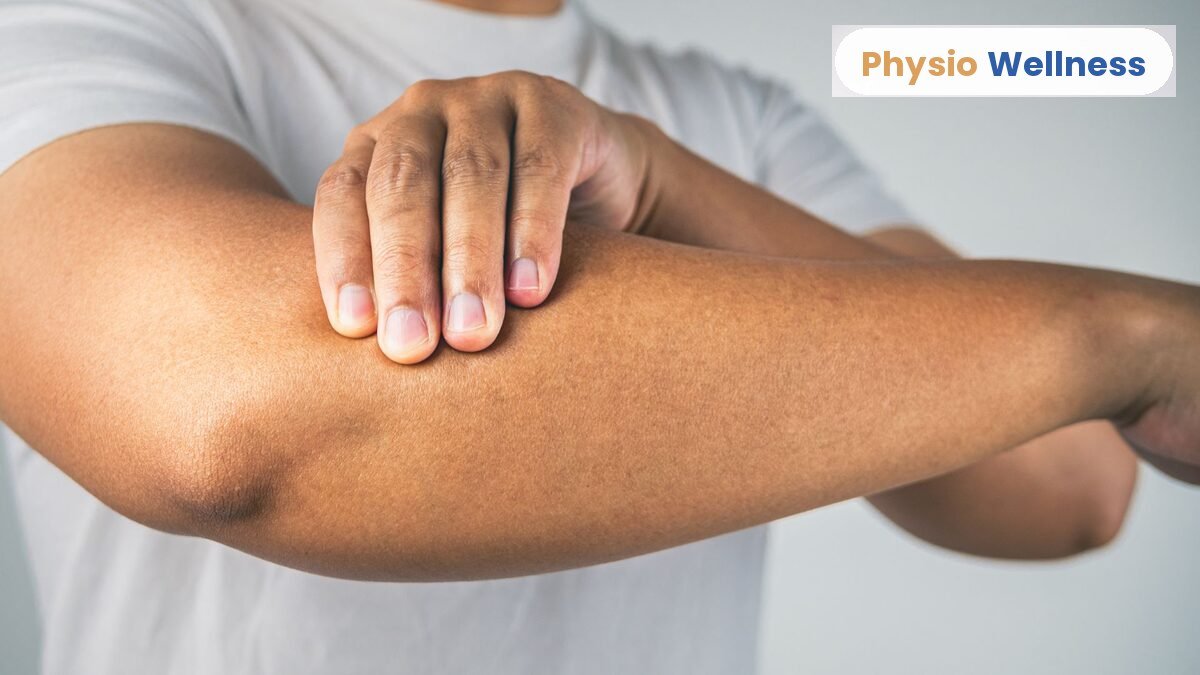
Physiotherapy with progressive loading is the foundation, and nearly everyone needs it. A tendon that has lost its tolerance has to be rebuilt no matter what else is going on, so physiotherapy leads the plan for almost every case: hands-on manual therapy to settle the tissue, and a progressive eccentric loading program that gradually retrains the forearm tendon to handle grip and lift again. This is the same reason rest alone rarely fixes stubborn soft-tissue pain. The tendon needs the right load, not none. Part of that plan is also sorting out the daily habits, the mouse setup, the grip, the repetitive task, that keep flaring it, so you stop feeding the problem between sessions.
Shockwave therapy is the escalation for stubborn, chronic cases. When the elbow has been dragging on and has not responded to the loading work, shockwave therapy uses acoustic waves to stimulate repair in slow-to-heal tendon. We tend to reach for it in cases that have been going for a few months or more, not as a first move.
So the plan is not a menu you pick from. Physiotherapy and a loading program underpin it, and shockwave is there for the cases that need a push.
How long does tennis elbow take to heal? The honest answer
Most people see real improvement over several weeks of consistent work, with the more stubborn cases taking a few months. That is the honest headline, because it is what we actually see.
Two things are worth saying plainly. First, tendon is slow-healing tissue, so progress is gradual and not perfectly linear. Some days will feel better than the day before, and some will not. Second, the people who recover fastest are the ones who keep up the loading program and the task changes after the sharp pain eases, rather than stopping the moment it feels better. Cases that have been dragging on for months before the first visit generally take longer to fully settle than ones caught early.
We will not put a fixed number of weeks or a success percentage on it, because your arm is not a statistic. What we can tell you at the assessment is what is driving your case and roughly what your timeline looks like.
When elbow pain is not tennis elbow
Not all outer-elbow or arm pain is tennis elbow, and part of a good assessment is ruling out the things that imitate it, because the treatment is different.
A few of the common mimics: golfer’s elbow, which is the same kind of tendon problem but on the inner side of the elbow rather than the outer; a pinched or irritated nerve, such as radial tunnel, which can cause forearm pain that is easy to confuse with tennis elbow; pain that is actually referred from an irritated nerve in the neck rather than the elbow itself; arthritis of the elbow joint; and, after a fall or specific injury, a ligament or bony problem.
The signs that point away from ordinary tennis elbow are worth knowing: numbness, tingling, or burning that radiates down the forearm or into the hand; pain on the inner side of the elbow rather than the outer; neck or shoulder pain in the same arm; the elbow catching, locking, or giving way; or pain that started right after a specific fall or blow. Any of those deserve a closer look before you assume it is the tendon. If you want a plain-language overview of the condition itself, the American Academy of Orthopaedic Surgeons keeps a good one.
The large majority of outer-elbow pain we see does turn out to be tennis elbow and does respond well to conservative care. The point of the assessment is to catch the cases that are something else, so you are not spending weeks loading a tendon when the real problem is the nerve or the neck.
Who we see for this in Etobicoke
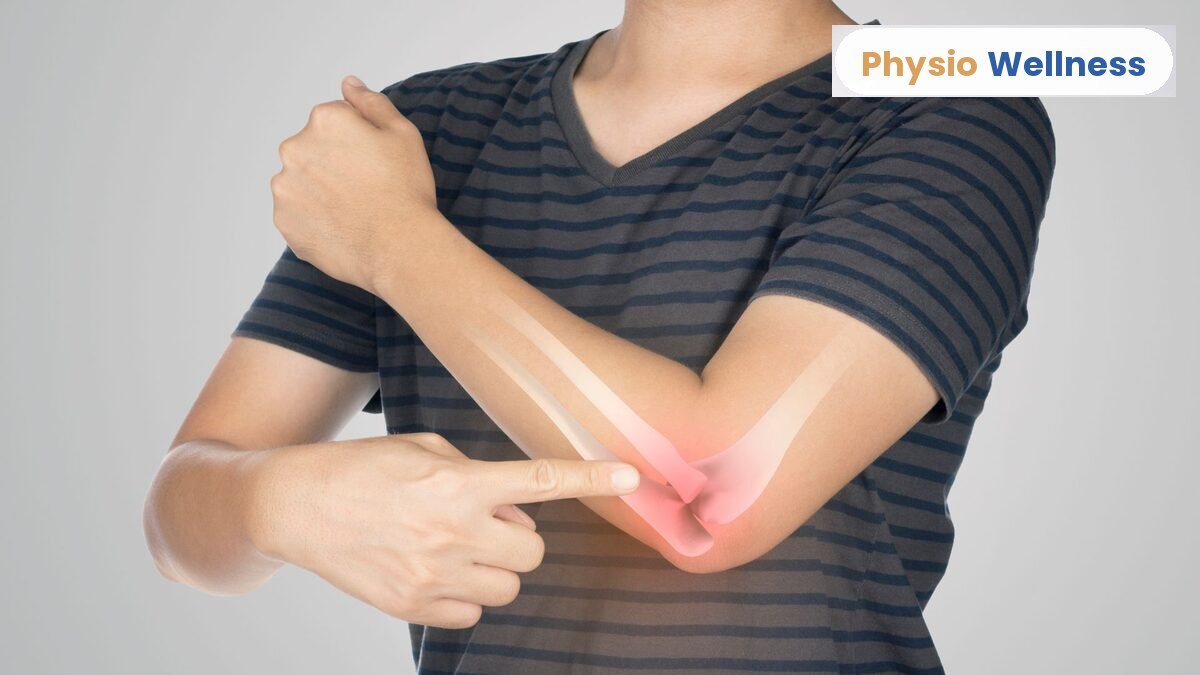
Tennis elbow has a type, and repetitive gripping is the thread that runs through all of it. The people we see most for this tend to be desk and office workers who are on a mouse and keyboard all day, tradespeople and warehouse staff around the Finch and Highway 27 corridor near our clinic who grip and twist tools for a living, and new parents lifting and carrying a growing child dozens of times a day. Add the weekend racquet and gym crowd, and you have most of who walks in with it.
If that sounds like you, you are not doing anything wrong, you are just in the group most likely to overload the forearm tendon and keep re-aggravating it. That is fixable, but not with a strap alone. If your elbow pain came from your job, it may be covered, and we can walk you through how WSIB physiotherapy works.
Ready to sort out your elbow pain?
We are a physiotherapy and rehab clinic in Etobicoke, serving Etobicoke and West Toronto since 1989. Most new patients are seen within about five business days, we direct-bill most insurers, and you do not need a referral to book physiotherapy.
Come in for a proper assessment of your elbow, your forearm, and how you grip and lift, and we will build a plan around what is actually driving your case. If your elbow pain has lasted more than a week, is getting worse, or is interfering with work or sleep, that is the time to have it looked at.
Request a consultation or call (416) 489-5313. Not sure what a first visit involves? Here is what to expect at your first appointment.