 Skip to content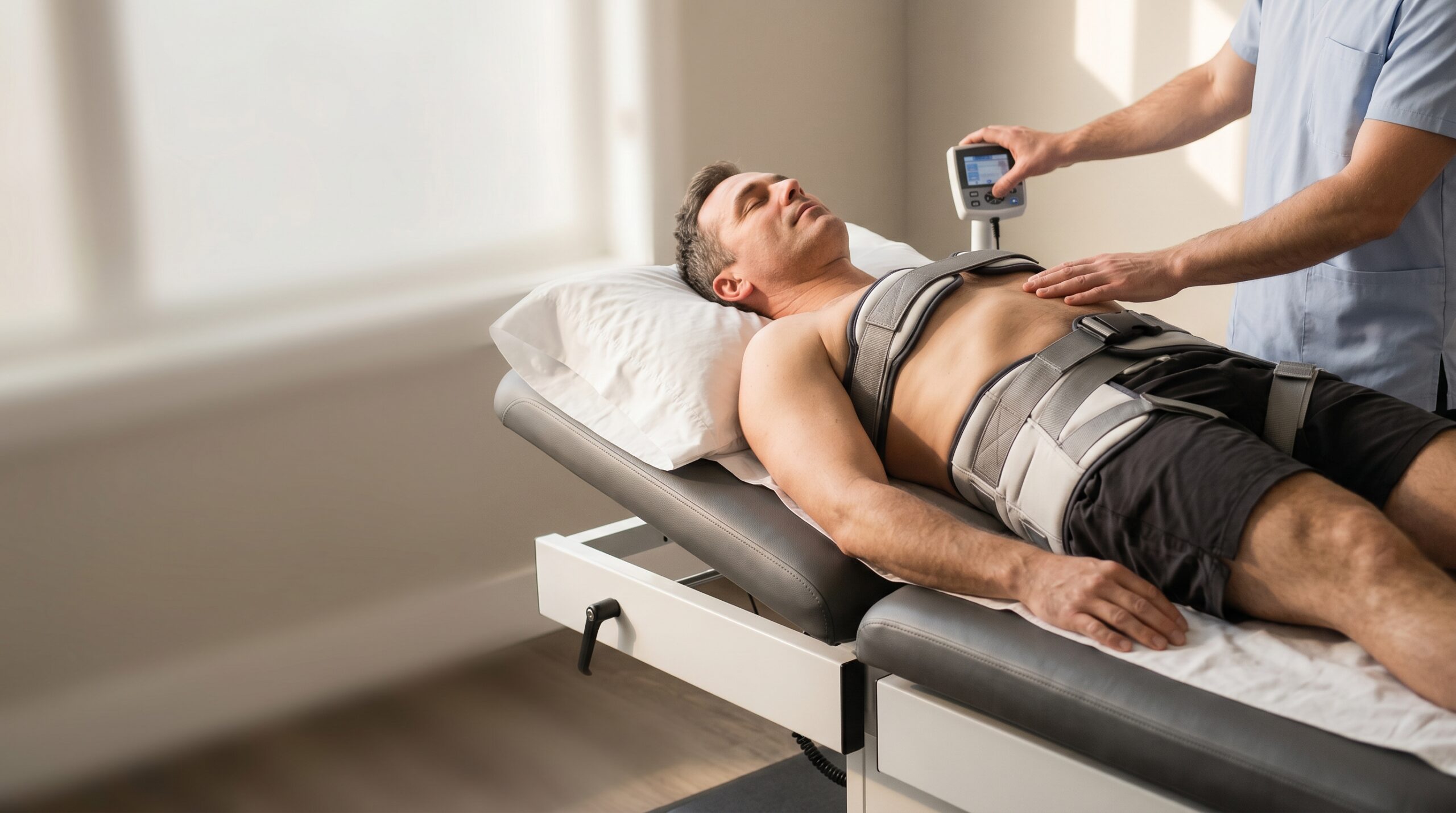
Spinal Decompression Therapy in Etobicoke.
Non-surgical relief for disc pain, sciatica, and spinal compression, when other treatments haven’t worked. Motorized, computer-controlled, clinician-supervised.
Could Spinal Decompression Help You?
You may be a good candidate if you:
What Is Spinal Decompression Therapy?
Spinal decompression is a motorized, computer-controlled traction therapy that gently stretches the spine in a precise, targeted pattern. Unlike basic traction (pulling), modern decompression tables apply cyclical distraction forces that create negative intradiscal pressure, essentially creating a vacuum effect inside the disc that draws herniated or bulging material back toward center and promotes the influx of water, oxygen, and nutrients.
This rehydration and repositioning effect is what makes spinal decompression clinically distinct from other conservative treatments. It addresses the disc itself, not just the surrounding muscles or joints.
Treatment is customized to your individual presentation. Your clinician sets the exact distraction force, angle, and duration based on your body weight, age, pain intensity, diagnosis, and whether your condition is acute or chronic. Sessions are comfortable, most patients describe a gentle stretching sensation, not pain.
Key clinical facts: Non-surgical and well-tolerated. Research shows 86–92% of patients report significant benefit. Typically 12–20 sessions over 4–6 weeks for optimal outcomes. Always delivered as part of a comprehensive treatment plan.

Conditions Treated with Spinal Decompression
Our Etobicoke clinic uses spinal decompression for the following spinal conditions. Your clinician will assess whether decompression is appropriate for your specific diagnosis.
Disc Herniation & Disc Bulge
A disc can protrude outward (bulge) or rupture and push material outside the disc wall (herniation), directly compressing nearby nerve roots. Spinal decompression creates negative intradiscal pressure that encourages the disc back toward natural position.
Sciatica / Sciatic Nerve Pain
Radiating pain, numbness, or weakness from the lower back through the buttock and down the leg. Disc-related nerve compression is the most common cause. Decompression directly addresses this root cause.
Degenerative Disc Disease
As discs lose height and hydration with age, spacing between vertebrae narrows, compressing nerve roots. Spinal decompression stimulates disc rehydration and reduces compression, slowing the degenerative cycle.
Spinal Stenosis
Narrowing of the spinal canal compresses the spinal cord and nerve roots. Causes pain, cramping, and heaviness in the legs, especially when walking. Decompression provides significant relief by reducing compressive load.
Pinched Nerve / Nerve Root Compression
Nerve compression from disc, bone spur, or joint overgrowth creates persistent nerve pain, numbness, or muscle weakness. Decompression reduces mechanical pressure on the nerve, allowing inflammation to resolve.
Facet Joint Syndrome
The facet joints of the spine develop osteoarthritis over time, causing stiffness and deep spinal pain. Decompression unloads these joints, reducing mechanical stress and pain.
What to Expect from Spinal Decompression Treatment
Initial Assessment
Thorough assessment with a physiotherapist or chiropractor, review of imaging (X-ray, MRI), physical exam, and discussion of history. We confirm you are a suitable candidate.
Decompression Sessions
20–30 min sessions. You lie on the table with a harness around your pelvis. The table applies prescribed distraction force in a cyclical pattern, alternating stretch and rest phases. Most patients find it relaxing.
Reassessment & Progression
Reassessed every 4–5 sessions. Parameters adjusted based on progress. Most patients notice meaningful improvement within the first 6–8 sessions. Typical course: 12–20 sessions over 4–6 weeks.
Spinal Decompression vs. Other Treatments
When other conservative options haven’t fully resolved disc-related pain, decompression directly addresses the disc.
Spinal Decompression
Directly addresses disc pathology · Non-surgical · No recovery time · Strong evidence (86–92% benefit). Requires a course of treatment; not suitable for all conditions.
Physiotherapy alone
Excellent for muscle strength and stabilization, but doesn’t directly unload disc pressure. Works best paired with decompression.
Chiropractic alone
Good for joint mobility and pain, but less direct effect on disc herniation. Often combined with decompression for best results.
Cortisone injection
Fast temporary relief, but doesn’t address the root cause. Limited repeats and side effects.
Surgery
Effective for severe cases, but invasive, with recovery time and risks. Often a last resort. The best approach for many patients is decompression combined with physiotherapy and/or chiropractic.
Spinal Decompression, Common Questions
A motorized, computer-controlled therapy that gently stretches the spine to reduce pressure on compressed discs and nerves. Creates negative intradiscal pressure, which can help reposition herniated or bulging material and restore disc hydration. Non-surgical and non-invasive.
Yes. Clinical research shows 86–92% of patients report significant benefit from spinal decompression for disc herniation. The therapy directly addresses disc pathology and reduces nerve root compression. Results are strongest when combined with physiotherapy rehabilitation.
Most patients require 12–20 sessions over 4–6 weeks for optimal results. Many notice improvement within 6–8 sessions. The exact number depends on your diagnosis, severity, how long you’ve had symptoms, and how quickly your body responds.
Yes. Decompression at our clinic is supervised by registered physiotherapists and chiropractors, so it is covered under most extended health plans that include physiotherapy or chiropractic. We offer direct billing. MVA and WSIB patients may also qualify.
Traction applies a constant, steady pull. Modern spinal decompression uses a computer-controlled, cyclical distraction pattern that alternates between stretch and rest phases. This cyclical approach more effectively creates negative intradiscal pressure, without triggering the protective muscle spasm that constant traction can cause.
Not suitable for patients with spinal fractures, severe osteoporosis, spinal instability, spinal tumors, pregnancy, or recent spinal surgery involving hardware. Patients with pacemakers or certain metal implants near the spine may also be excluded. Your clinician will screen for all contraindications.
No. Most patients find spinal decompression comfortable, a gentle, rhythmic stretch. Because the distraction force is computer-controlled and calibrated to your specific weight and condition, treatment avoids triggering pain or protective muscle guarding. Some mild post-treatment soreness is normal in the first few sessions.
Ready to Stop Living with Back Pain?
Book your spinal decompression assessment in Etobicoke. A registered physiotherapist or chiropractor will assess whether decompression is right for you, no obligation. Direct billing. MVA and WSIB welcome.